
You can have the right microphone, a great podcast concept, a polished brand, and even a solid content strategy—but still struggle when it comes time to actually use your voice.
Sometimes the biggest thing standing between us and the message we want to share isn’t strategy at all. It’s fear. Self-doubt. Perfectionism. Worrying about what other people will think. Or simply spending so much time in our heads that we lose touch with the heart behind what we wanted to say in the first place.
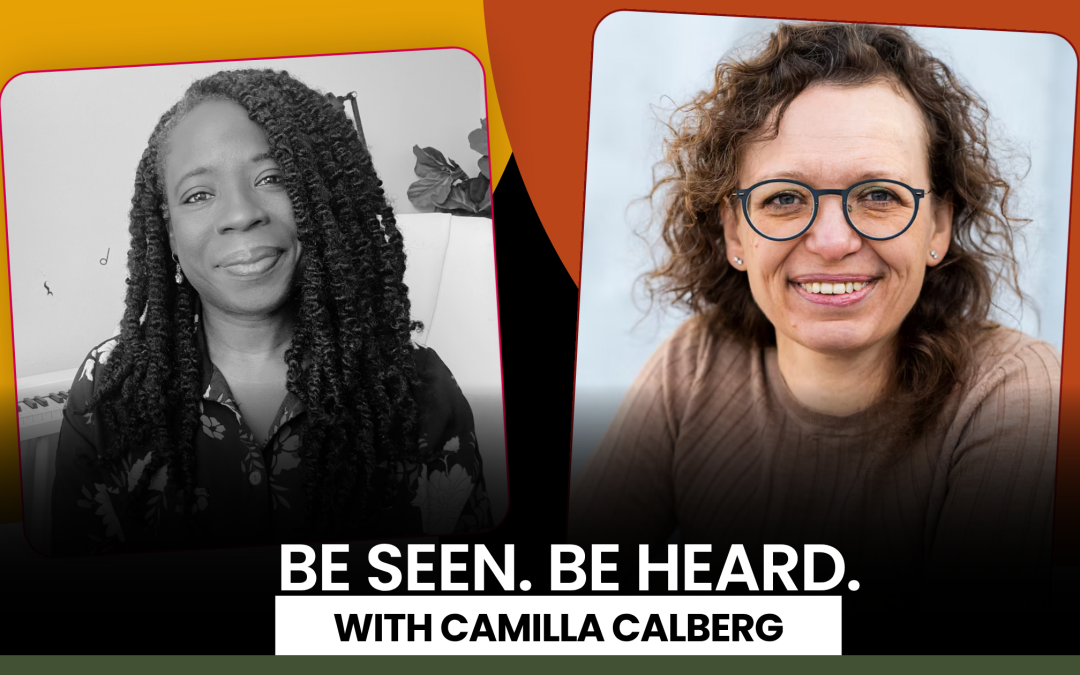
And that’s why I loved my recent conversation with global leadership coach Camilla Calberg.
We talked about what it really means to own your voice, why authenticity requires inner work, and how our personal experiences can become part of the message we’re meant to share with others.
For podcasters and entrepreneurs, this is an especially important conversation. We spend so much time thinking about what we should say, how we should market ourselves, and how to grow our platforms that we can sometimes forget to ask a more important question:
Who needs to hear my story?
Here are some of my biggest takeaways from my conversation with Camilla.
Who Is Camilla Calberg?

Camilla Calberg is a global leadership coach who helps high-achieving women rise from burnout, silence, and self-doubt into clarity, power, and soul-aligned leadership. Before becoming a coach, Camilla spent approximately 20 years working in corporate environments, including roles with major global companies. Today, she combines that business experience with the deeper emotional work she has learned through her own personal journey.
And her journey hasn’t been an easy one.
Camilla shared openly about going through a difficult divorce and a court process that lasted several years while raising her daughter. That season forced her to learn how to regulate her emotions, establish healthier boundaries, become more resilient, and find her own voice in circumstances where she felt watched, judged, and misunderstood.
Eventually, those experiences became part of her work.
Today, she helps other women recognize where they may be dimming their light, playing the “nice girl,” doubting themselves, or being afraid to fully express what they think and believe.
A Powerful Voice Starts on the Inside
When we think about becoming better podcasters, we usually think about things we can improve externally.
Maybe we need a better microphone.
Maybe we need stronger interview questions.
Maybe we need to improve our storytelling.
Maybe we need to become more consistent.
Those things matter, but Camilla brought up another side of communication that we don’t talk about nearly enough: the internal work behind the voice.
You can learn all the right podcasting strategies and still hesitate every time you press record.
You can have something meaningful to say and still second-guess whether anyone wants to hear it.
You can even become successful and still find yourself shrinking in certain rooms because you’re worried about being judged, misunderstood, or disliked.
Camilla sees this with high-achieving women in leadership as well. Someone may be incredibly capable and experienced but still hesitate to make her point because she’s thinking, What will they think if I say this?
That same fear can easily follow us behind the microphone.
Owning your voice isn’t simply about learning to speak more confidently. Sometimes it means examining what has taught you to hold back in the first place.
Who Needs to Hear Your Story?
This was probably my favorite question from our entire conversation.
Who needs to hear your story?
When Camilla said it, I immediately thought about how powerful that question can be for podcasters.
We can get so caught up in downloads, followers, monetization, episode schedules, SEO, social media, and all the other pieces involved in growing a podcast that we forget there is an actual person on the other side of the microphone.
Someone may need the very thing you’re afraid to talk about.
Camilla suggested thinking about where you were five years ago. What did you need to hear then? What have you learned since? What do you understand now that you wish your younger self had understood?
There are people standing in places you have already walked through.
Your experience doesn’t have to be dramatic to be valuable, either.
Maybe you learned how to build a business while raising children.
Maybe you figured out how to navigate a career transition.
Maybe you learned something about marriage, leadership, faith, creativity, health, entrepreneurship, grief, parenting, or starting over.
Your story may be someone else’s roadmap.
And sometimes remembering that is exactly what we need to stop obsessing over ourselves and start thinking about the person we’re trying to serve.
Stop Trying to Control Every Word
Another part of our conversation that really stood out to me was Camilla’s distinction between speaking from the head and speaking from the heart.
When we’re trying to control everything, we tend to stay in our heads.
We’re thinking about the next question.
The next sentence.
Whether we sound intelligent enough.
Whether we said something incorrectly.
Whether the audience will approve.
Whether we’re rambling.
Whether this is “good content.”
And the more we monitor ourselves, the harder it can become to simply be present.
Camilla encourages people to relax and speak from the heart instead.
That doesn’t mean we shouldn’t prepare. I’m a big believer in preparing for podcast episodes and knowing where you want a conversation to go.
But preparation should support the conversation—not suffocate it.
Sometimes the best podcast moments happen when we loosen our grip on the outline enough to follow the conversation somewhere unexpected.
Talk to One Person
Camilla shared a really simple practice she uses before recording content: she imagines herself speaking directly to one person.
Maybe it’s a client.
Maybe it’s someone she knows well.
Maybe it’s even a friend.
Instead of imagining hundreds or thousands of people watching or listening, she pictures a real conversation.
I love this strategy for podcasters because podcasting is already such an intimate medium.
Most people aren’t listening to your podcast in a crowded auditorium. They’re listening through headphones while walking the dog, driving to work, cleaning the kitchen, exercising, or sitting somewhere by themselves.
You are essentially having a one-on-one conversation at scale.
So try recording that way.
Instead of thinking, How do I perform this episode for my audience?
Think:
What would I say if the person who really needs this were sitting across from me right now?
Your voice will probably change.
Your shoulders might relax.
Your personality will come through more naturally.
And suddenly, you’re not performing anymore.
You’re connecting.
Authenticity Takes Practice
We hear the word “authenticity” everywhere now.
Just be yourself.
Show up authentically.
Use your authentic voice.
It sounds simple until you actually have to do it.
Camilla talked about spending years in corporate environments where people often learn to put on professional masks. Many of us have learned similar habits in different areas of our lives.
We learn how we’re “supposed” to sound.
Then we bring those expectations into podcasting.
Suddenly, the person who is funny, expressive, thoughtful, opinionated, warm, or quirky in everyday life becomes stiff behind the microphone.
Authenticity requires practice because it requires trust.
You have to trust yourself enough to allow your real personality, perspective, experiences, and opinions to come through.
And you don’t have to master that on episode one.
The more you record, the easier it becomes.
Your Fear Might Be Telling You Something
Toward the end of our conversation, Camilla encouraged listeners to become curious about the places where they procrastinate or repeatedly choose the safer option.
Sometimes what looks like procrastination is actually fear.
Why haven’t you launched the podcast?
Why haven’t you pitched yourself as a guest?
Why haven’t you recorded that episode you’ve been thinking about for six months?
Why haven’t you talked about the subject you really want to talk about?
Why do you keep choosing Plan B when you know what Plan A is?
Instead of immediately criticizing yourself for not taking action, get curious.
What are you afraid will happen?
Are you afraid people will judge you?
Are you worried you’re not qualified enough?
Are you afraid the episode won’t perform well?
Are you worried someone you know will hear it?
Are you afraid of being visible?
Sometimes the next stage of growth isn’t about finding another strategy.
It’s about understanding what keeps pulling you away from the strategy you already know you want to pursue.
Your Message Has to Become Bigger Than Your Fear
Camilla shared another idea that I think every podcaster should sit with:
Your message has to become bigger than you.
There will always be reasons to hold back.
There will always be someone more experienced.
There will always be someone with a larger audience.
There will always be someone who disagrees with you.
And there will probably always be a little part of you wondering whether you’re really ready.
But eventually, you have to decide whether the message matters enough to share anyway.
That’s one of the beautiful things about podcasting.
You don’t need to have everything figured out before you speak.
Sometimes you can share from what you’ve already learned while acknowledging that you’re still learning.
You can share wisdom from a chapter you’ve completed while still living through the rest of the story.
Your voice doesn’t become valuable only after you’ve reached some imaginary finish line.
Final Thoughts
There’s plenty of strategy involved in building a successful podcast, and I love talking about strategy. But this conversation with Camilla reminded me that sometimes the most important podcasting work happens before we ever press record.
It happens when we examine why we’re holding back.
When we stop trying to control every word.
When we become more comfortable being ourselves.
When we remember the person on the other side of the microphone.
And when we decide that helping that person matters more than sounding perfect.
So if you’ve been struggling to find your voice—or you’ve technically found it but still hesitate to fully use it—I want you to think about the question Camilla asked during our conversation:
Who needs to hear your story?
Maybe there’s one person who needs to hear what you know.
One person who needs to hear what you’ve survived.
One person who needs the encouragement, wisdom, experience, or perspective you can offer.
Sometimes one person is enough reason to press record.
And the more you practice showing up as yourself, the more powerful your voice becomes.
How to reach Camilla
Find out more about Camilla and her current offerings at: https://www.camillacalberg.com/
Need Help Planning a Podcast?
If you’re ready to grow your show, attract aligned listeners, and create episodes that convert, subscribe for more podcast coaching tips and strategies. Your next great episode starts with a plan.
Download my free Podcast Launch Workbook to follow along with this checklist step by step.

- 134. Why Educators Make Some of the Best Podcasters – Podcasting For Teachers - October 14, 2026
- 133. Building a Podcast That Lasts with Jordan Blair - September 30, 2026
- 132. If I Had to Start My Podcast Over, Here’s What I’d Do - September 19, 2026