
Most people don’t struggle with content because they lack ideas. They struggle because their message isn’t landing with the people they actually want to reach. You can be consistent, strategic, and even technically “doing everything right,” but if your understanding of your audience is off, your results will always feel inconsistent. At some point, every creator hits this wall—the feeling that you’re speaking, but not being heard. And that’s usually where the real work begins: not creating more, but understanding better.
Who Is Rachel Allen?

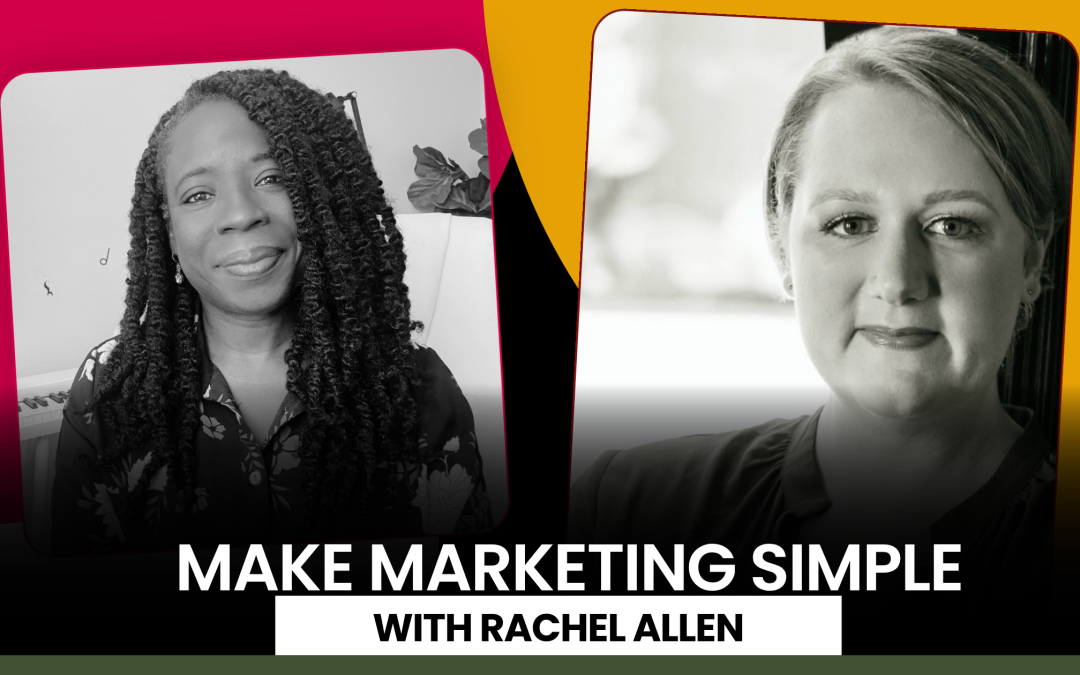
I recently had a conversation with Rachel Allen that brought this into sharp focus. Rachel is a marketing strategist, copywriter, and founder of Bolt from the Blue Copywriting. With over 17 years of experience in marketing across nonprofit and for-profit sectors, she has worked with clients in more than 21 countries. Her strength lies in blending data-driven strategy with human-centered messaging—helping organizations and entrepreneurs clarify what they actually mean, not just what they think sounds good. In other words, she helps people stop guessing and start communicating with precision.
One of the biggest misconceptions in marketing is that knowing your audience means defining them in detail on paper. Age, job title, income level, interests. We call it an “ideal client avatar,” and for many people, that becomes the foundation of their entire strategy. But here’s the problem: real people don’t behave like profiles. They don’t make decisions based on demographics. They make decisions based on emotion, timing, pressure, confusion, desire, fear, and context.
When Rachel and I talked, she pushed on this idea in a really grounded way. She made it clear that most marketing advice isn’t failing because it’s wrong—it’s failing because it’s incomplete. You can know who you are talking to and still miss how they think. And if you miss how they think, your message will always feel slightly off, no matter how polished it is.
This is where a lot of creators get stuck. They focus on visibility before clarity. They try to grow before they understand. They look for tactics when what they actually need is insight. Because clarity about your audience changes everything—what you say, how you say it, and even what you choose not to say.
When you really understand your audience, content creation stops feeling like guesswork. You’re no longer sitting down wondering what to post or how to sound “relevant.” Instead, you’re speaking to real patterns you’ve observed in real people. You start to recognize the questions they’re not asking out loud but are clearly struggling with underneath the surface.
That shift changes your entire approach to communication. You stop trying to appeal to everyone and start aiming for resonance with someone specific. And ironically, that’s what makes your message stronger and more scalable.
We also talked about how easy it is to rely too heavily on frameworks—especially ideal client avatars—and miss the nuance of real human behavior. Because people are layered. They change their minds. They contradict themselves. They say they want one thing but respond to something entirely different.
So the question becomes less about “Who is my audience?” and more about “What is my audience actually experiencing right now—and how does that shape what they are ready to hear from me?”
That’s a very different level of thinking. And it’s the level where messaging starts to become powerful.
Another important layer of this conversation was how easily creators can default to noise instead of clarity. More content. More posts. More pressure to stay visible. But visibility without understanding doesn’t create connection—it creates fatigue. For you and your audience.
Clarity, on the other hand, simplifies everything. It helps you filter ideas. It helps you communicate more directly. It helps your audience feel seen instead of sold to.
And that’s really the core of it. When people feel understood, they engage differently. They trust more quickly. They respond more honestly. Because they don’t feel like they’re being marketed to—they feel like someone actually gets them.
That’s why knowing your audience isn’t just a marketing exercise. It’s the foundation of everything that actually works.
The irony is that most of us already have access to the information we need. It’s in the comments people leave, the questions they ask, the hesitations they express, and even the content they ignore. The challenge is not gathering more data—it’s learning how to actually see what’s already there.
When you start to do that consistently, your content stops feeling like a performance and starts feeling like communication. And that’s when things begin to shift—not just in your numbers, but in your confidence.
Because once you know who you’re talking to in a real way, you stop second-guessing every word.
And you start building something that actually connects.
How to Reach Rachel
Find out more about Rachel and her current offers at https://www.boltfromthebluecopywriting.com/
Need Help Planning a Podcast?
If you’re ready to grow your show, attract aligned listeners, and create episodes that convert, subscribe for more podcast coaching tips and strategies. Your next great episode starts with a plan.
Download my free Podcast Launch Workbook to follow along with this checklist step by step.

- 132. If I Had to Start My Podcast Over, Here’s What I’d Do - September 19, 2026
- 131. How Lindsay McMahon Turned a Podcast Into a Global Business - September 13, 2026
- 129. The Inner Work Behind a Powerful Voice with Camilla Calberg - August 25, 2026