Most people don’t struggle with content because they lack ideas. They struggle because their message isn’t landing with the people they actually want to reach. You can be consistent, strategic, and even technically “doing everything right,” but if your understanding of your audience is off, your results will always feel inconsistent. At some point, every creator hits this wall—the feeling that you’re speaking, but not being heard. And that’s usually where the real work begins: not creating more, but understanding better.
Who Is Rachel Allen?
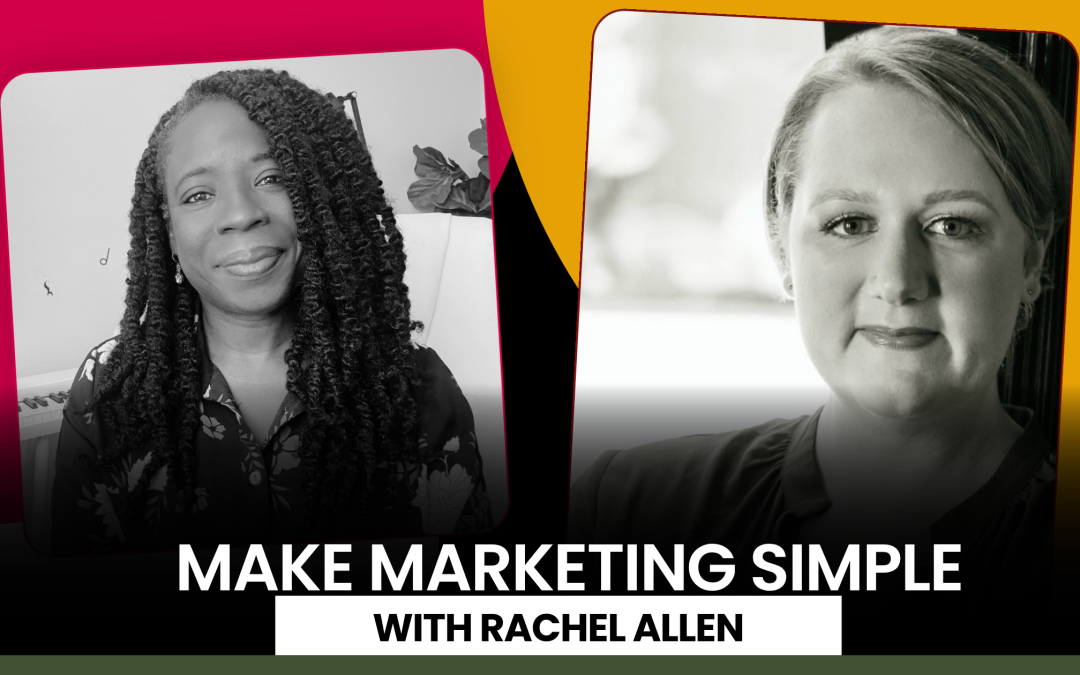
I recently had a conversation with Rachel Allen that brought this into sharp focus. Rachel is a marketing strategist, copywriter, and founder of Bolt from the Blue Copywriting. With over 17 years of experience in marketing across nonprofit and for-profit sectors, she has worked with clients in more than 21 countries. Her strength lies in blending data-driven strategy with human-centered messaging—helping organizations and entrepreneurs clarify what they actually mean, not just what they think sounds good. In other words, she helps people stop guessing and start communicating with precision.
One of the biggest misconceptions in marketing is that knowing your audience means defining them in detail on paper. Age, job title, income level, interests. We call it an “ideal client avatar,” and for many people, that becomes the foundation of their entire strategy. But here’s the problem: real people don’t behave like profiles. They don’t make decisions based on demographics. They make decisions based on emotion, timing, pressure, confusion, desire, fear, and context.
When Rachel and I talked, she pushed on this idea in a really grounded way. She made it clear that most marketing advice isn’t failing because it’s wrong—it’s failing because it’s incomplete. You can know who you are talking to and still miss how they think. And if you miss how they think, your message will always feel slightly off, no matter how polished it is.
This is where a lot of creators get stuck. They focus on visibility before clarity. They try to grow before they understand. They look for tactics when what they actually need is insight. Because clarity about your audience changes everything—what you say, how you say it, and even what you choose not to say.
When you really understand your audience, content creation stops feeling like guesswork. You’re no longer sitting down wondering what to post or how to sound “relevant.” Instead, you’re speaking to real patterns you’ve observed in real people. You start to recognize the questions they’re not asking out loud but are clearly struggling with underneath the surface.
That shift changes your entire approach to communication. You stop trying to appeal to everyone and start aiming for resonance with someone specific. And ironically, that’s what makes your message stronger and more scalable.
We also talked about how easy it is to rely too heavily on frameworks—especially ideal client avatars—and miss the nuance of real human behavior. Because people are layered. They change their minds. They contradict themselves. They say they want one thing but respond to something entirely different.
So the question becomes less about “Who is my audience?” and more about “What is my audience actually experiencing right now—and how does that shape what they are ready to hear from me?”
That’s a very different level of thinking. And it’s the level where messaging starts to become powerful.
Another important layer of this conversation was how easily creators can default to noise instead of clarity. More content. More posts. More pressure to stay visible. But visibility without understanding doesn’t create connection—it creates fatigue. For you and your audience.
Clarity, on the other hand, simplifies everything. It helps you filter ideas. It helps you communicate more directly. It helps your audience feel seen instead of sold to.
And that’s really the core of it. When people feel understood, they engage differently. They trust more quickly. They respond more honestly. Because they don’t feel like they’re being marketed to—they feel like someone actually gets them.
That’s why knowing your audience isn’t just a marketing exercise. It’s the foundation of everything that actually works.
The irony is that most of us already have access to the information we need. It’s in the comments people leave, the questions they ask, the hesitations they express, and even the content they ignore. The challenge is not gathering more data—it’s learning how to actually see what’s already there.
When you start to do that consistently, your content stops feeling like a performance and starts feeling like communication. And that’s when things begin to shift—not just in your numbers, but in your confidence.
Because once you know who you’re talking to in a real way, you stop second-guessing every word.
And you start building something that actually connects.
If you’re ready to grow your show, attract aligned listeners, and create episodes that convert, subscribe for more podcast coaching tips and strategies. Your next great episode starts with a plan.
One of the biggest misconceptions in podcasting right now is this idea that publishing your episode is enough.
You record the episode. You edit it. You upload it to Spotify and Apple Podcasts. Maybe you post about it once on Instagram stories.
And then you wait.
You wait for listeners. You wait for growth. You wait for people to somehow discover your show.
But here’s the truth a lot of podcasters are slowly realizing:
Podcast apps alone are no longer enough to create meaningful podcast visibility.
And honestly? That’s not your fault.
The way people discover podcasts has completely changed over the last few years. Most listeners are not scrolling through podcast apps hoping to stumble across someone new. They’re finding creators through clips, social media, YouTube searches, newsletters, blog posts, and conversations happening all over the internet.
People usually discover you first. Then they decide to listen to your podcast.
That shift changes everything.
Because if your podcast only exists inside podcast apps, your visibility is limited to people already searching there. And for many creators, that becomes an invisible ceiling on growth.
Not because their content isn’t valuable. Not because their voice isn’t needed. But because their podcast visibility strategy stops at the upload.
Your podcast needs more than a publishing platform. It needs an ecosystem.
The good news is that building better podcast visibility does not require you to be everywhere all the time. You do not need to become a full-time content machine. You simply need a few intentional places where your message can continue reaching people beyond the podcast app itself.
There are three places I believe every podcaster should be showing up if they want sustainable visibility and long-term growth.
1. Short-Form Content: Your Visibility Layer
If you want more people discovering your podcast, short-form content matters.
Instagram Reels. TikTok. YouTube Shorts.
These platforms are where people’s attention already lives.
But I think a lot of podcasters misunderstand what short-form content is actually supposed to do.
Its job is not to explain your entire episode. Its job is not perfection. Its job is not even going viral.
Its job is to create curiosity.
That’s it.
Good short-form content makes someone pause long enough to think: “I need to hear more from her.”
That moment matters.
Because sometimes one honest clip, one insightful sentence, or one relatable moment is enough to turn a complete stranger into a new listener.
Short-form content is your visibility layer because it introduces your voice to people who may have never found your podcast otherwise.
And the beautiful thing is that you do not need to constantly reinvent yourself to make this work.
Your podcast episode already contains the content.
Inside every episode, there are moments you can repurpose:
A powerful quote
A personal story
A thought-provoking insight
A practical takeaway
A moment of vulnerability
A strong opinion
You only need one compelling idea to invite someone deeper into your world.
That’s the role of visibility content. It opens the door.
And if you’ve been feeling frustrated that your podcast isn’t growing, sometimes the issue isn’t your content quality at all. Sometimes people simply aren’t seeing enough of your voice outside the podcast platforms.
2. Your Email List: Your Connection Layer
Podcast visibility may help people discover you, but connection is what keeps them around.
That’s where your email list comes in.
And honestly, I believe this is one of the most overlooked parts of podcast growth right now.
Social media can help your visibility. But your email list helps build relationship.
There’s a huge difference between someone casually following your content and someone willingly inviting your words into their inbox.
One is passive. The other is intentional.
And unlike social media, your email list belongs to you.
Algorithms shift constantly. Reach changes overnight. Platforms evolve, disappear, or suddenly stop prioritizing the kind of content you create.
But your email list remains a direct line to the people who genuinely want to hear from you.
That matters.
Especially in a world where online spaces feel increasingly noisy and transactional.
Your newsletter does not have to be polished or complicated to be effective. In fact, some of the best emails feel simple and personal.
Tell your audience:
What your latest episode is about
Why you felt led to record it
What you hope they take away from it
A small personal reflection or encouragement
That’s enough.
People connect with people.
And when listeners begin hearing from you consistently through email, trust deepens in a way that social media alone often cannot create.
This is where casual listeners slowly become loyal community members.
So if you do not currently have an email list, let this be your encouragement to start one now — not later when your podcast gets bigger.
Because sustainable podcast visibility is not only about reaching new people. It’s also about nurturing the people who have already found you.
3. Searchable Content: Your Longevity Layer
This is the layer that quietly keeps working for you long after your episode goes live.
Your searchable content layer includes places like:
YouTube
Blog posts
Search-friendly website content
Episode summaries
SEO-rich descriptions
And this layer is incredibly important for long-term podcast visibility.
Why?
Because every day people are actively searching for answers online.
Someone right now is typing a question into Google or YouTube that your podcast episode already addresses.
But if your content only lives inside a podcast app, there’s a good chance they will never find it.
Searchable content changes that.
It allows your podcast to become discoverable over time instead of disappearing after a few days of promotion.
This is how your podcast becomes evergreen.
Instead of every episode having a short lifespan, your content begins building a searchable library that continues introducing new people to your work months or even years later.
And no — this does not mean you suddenly need to become a professional YouTuber or blogger overnight.
Please don’t overwhelm yourself trying to do everything at once.
Simple is enough.
You can start by:
Uploading your podcast episodes to YouTube
Writing short blog summaries
Adding searchable keywords to your titles and descriptions
Repurposing transcripts into helpful written content
These small steps slowly build long-term podcast visibility in ways many creators underestimate.
The podcasters growing sustainably right now are usually not relying on one platform alone. They’re building multiple pathways that help people discover their message over time.
You Don’t Need to Be Everywhere
I really want to emphasize this part because I know how easy it is to hear conversations about visibility and immediately feel pressure.
You do not need to show up on every platform. You do not need to create nonstop content. You do not need to burn yourself out trying to keep up with everyone else online.
You simply need clarity around the role each platform plays.
Each one supports your podcast visibility in a different way.
And if one layer is missing, growth can start feeling frustrating or inconsistent.
Not because your message lacks value. But because people do not have enough opportunities to find and stay connected with you.
That’s the real issue for many podcasters right now.
Not talent. Not calling. Not even consistency.
Visibility.
The encouraging part is that this can be built slowly and intentionally over time.
You do not have to fix everything this week.
Instead, choose one area you know you’ve been neglecting and focus there for the next thirty days.
Just one.
Because sustainable visibility is not built through constant hustle. It’s built through intentional presence.
Your voice deserves to be heard in more than one place.
And there are people out there right now who need what you have to say — they just haven’t discovered you yet.
If you want additional support building a podcast strategy that feels aligned, sustainable, and clear, download the free Soul Podcasting Blueprint at Soul Podcasting Resources. It walks through the foundations of planning, production, promotion, and long-term podcast growth in a practical, simplified way.
Need Help Planning a Podcast?
If you’re ready to grow your show, attract aligned listeners, and create episodes that convert, subscribe for more podcast coaching tips and strategies. Your next great episode starts with a plan.
AI is changing podcasting fast. That is not even up for debate anymore. What is still very much up for discussion is how we, as creators, choose to use it.
Some people are all-in and automating everything. Some people are avoiding it completely. Most of us are somewhere in the middle, trying to figure out how to use it in a way that actually helps our work without flattening our voice or disconnecting us from what makes our content human.
That is where I am right now.
I have been in the podcasting space for over 21 years, and I have watched every major shift you can imagine. From early audio blogging days, to the rise of iTunes, to the social media explosion that changed how we promote content, to now, where AI is sitting in the middle of almost every creative conversation.
And I want to share my honest perspective, not as someone chasing trends, but as someone who is actively using these tools every week in real time.
This is not a hype conversation. This is a grounded one.
Let’s talk about AI podcasting, ethics, and authenticity.
AI is a tool, not a replacement
One of the biggest shifts I had to make mentally was this: AI is not here to replace my thinking. It is here to support it.
That distinction matters more than people realize.
I see a lot of creators using AI in a way that skips the thinking process entirely. They are asking it to generate ideas, write scripts, create posts, and essentially do the entire creative process for them.
And while that might feel efficient, something important gets lost in that process.
Your voice.
Your discernment.
Your lived experience.
Your ability to decide what actually matters.
For me, AI is a tool I use to support my work, not something that replaces my creative responsibility.
I still have to think. I still have to decide. I still have to bring my voice into everything that gets published.
Because if I do not, the content might be polished, but it will not be mine.
The problem with AI right now
Let’s be honest. There is a lot of noise in the AI space right now.
There are endless tools, endless tutorials, and a constant pressure to automate everything so you can “scale faster.”
But here is what I have noticed.
A lot of content created with AI right now is starting to sound the same.
It is clean. It is structured. It is technically correct.
But it often lacks depth. It lacks personality. It lacks the human fingerprints that make content feel lived in.
And I think part of that is because people are skipping the most important step: clarity.
If you do not know what you think, AI will not fix that for you. It will just organize your confusion faster.
That is why I always come back to intention.
Why am I using this tool?
What part of my process actually needs support?
Where do I still need to stay fully engaged?
Those questions matter more than the tool itself.
How I actually use AI in my podcast workflow
Let me make this practical and real for you, because I do use AI regularly in my podcasting workflow. But I use it in very specific ways.
1. Brainstorming and outlines with ChatGPT
I use ChatGPT as a thinking partner.
This is where I go when I am trying to get unstuck or when I want to explore different angles for an episode.
Sometimes I will take a rough idea and ask it to help me expand it or structure it. Sometimes I just brainstorm out loud.
But I am very intentional here.
I am not letting it define my message. I am using it to sharpen what I already sense I want to say.
It helps me move faster, but I am still driving the direction.
2. Writing and expanding content with Claude
Once I have my direction, I often use Claude to help me flesh things out.
This is where I might take an outline and ask it to help me organize my thoughts more clearly or expand certain sections into full ideas.
It is especially helpful when I am building podcast scripts or trying to turn scattered thoughts into something structured.
But again, I do not just copy and paste.
I read it. I adjust it. I rewrite parts of it. I bring my tone back into it.
Because the goal is not efficiency alone.
The goal is clarity that still sounds like me.
3. Deep research and source-based thinking with NotebookLM
One of the most interesting tools I have started using is NotebookLM.
This is different because it allows me to work directly from my own materials.
So instead of pulling random information from the internet, I can upload things like:
past podcast episodes
notes
outlines
blog posts
And then ask it to analyze my own content.
I use it to:
compare themes across episodes
identify patterns in what I have already taught
deepen my understanding of my own work
This is powerful because it keeps me grounded in my actual voice and not just external information.
It also helps reduce one of the biggest risks with AI, which is misinformation or “hallucinated” answers.
When I am working from my own content, I know the foundation is solid.
AI should expand your thinking, not replace it
One thing I have learned quickly is that AI is most powerful when it expands your thinking, not when it replaces it.
If I rely on it too heavily, my content starts to feel generic.
But when I use it well, it helps me:
clarify ideas faster
see angles I might have missed
structure my thoughts more effectively
It becomes a support system, not a decision-maker.
And that difference is everything.
My concerns about AI as a creator
I also want to be honest about my concerns, because I do not think this conversation should be one-sided.
There are three things I think about often:
1. Ethics and accountability
We are still learning how to use these tools responsibly.
Who is accountable for the content being created?
How do we ensure accuracy?
How do we avoid spreading misinformation or overly polished but empty content?
These are real questions, and I do not think we have all the answers yet.
2. Authenticity and voice
The more AI-generated content we consume, the more everything starts to sound the same.
That is where creators need to be careful.
If we are not actively protecting our voice, we risk blending into a sea of sameness.
Your voice is not just your words. It is your perspective, your lived experience, and your discernment.
AI cannot replace that.
3. Environmental impact and responsibility
This is something I think more people need to talk about.
AI systems require significant energy to run. That has an environmental cost.
So even as we use these tools, I think we also need awareness.
Not fear. Not avoidance.
But awareness.
We should be asking:
How often am I using this?
Am I using it intentionally?
Am I creating value with it or just convenience?
Those questions matter.
Where I land with AI right now
I am not afraid of AI.
I am not rejecting it either.
I am actively learning how to use it in a way that supports my work, respects my voice, and keeps me grounded in my values.
I think that is the middle ground a lot of creators are trying to find right now.
We are all figuring this out in real time.
But here is what I know for sure:
AI will not replace thoughtful creators.
It will amplify whatever is already there.
If there is clarity, it will amplify clarity.
If there is confusion, it will amplify confusion.
If there is intention, it will amplify intention.
So the real work is not learning every tool.
The real work is staying clear about who you are and what you are creating.
Final thoughts
At the end of the day, I think AI is here to stay.
The question is not whether we use it.
The question is how we use it.
For me, the answer is simple.
I use it to think better, not to think less.
I use it to support my creativity, not replace it.
And I use it while staying deeply aware that my voice, my discernment, and my humanity are still the most important parts of what I create.
Because that is what people actually connect to.
Not perfection.
Not automation.
But presence.
If you are a creator navigating this too, I would love to hear where you are with it. Are you experimenting with AI, avoiding it, or still figuring it out?
This is a conversation we are all part of now.
If you want additional support building a podcast strategy that feels aligned, sustainable, and clear, download the free Soul Podcasting Blueprint at Soul Podcasting Resources. It walks through the foundations of planning, production, promotion, and long-term podcast growth in a practical, simplified way.
Need Help Planning a Podcast?
If you’re ready to grow your show, attract aligned listeners, and create episodes that convert, subscribe for more podcast coaching tips and strategies. Your next great episode starts with a plan.
Podcast marketing can start to feel overwhelming fast.
One minute you’re excited about your show, your message, and the people you want to reach. The next minute, you’re buried under advice telling you to post constantly, master five platforms, repurpose every episode into twenty pieces of content, and somehow still maintain a consistent publishing schedule without burning out.
It’s a lot.
And for many independent podcasters, the pressure to “keep up” eventually becomes the reason they stop showing up altogether.
Not because they lack passion. Not because their podcast isn’t valuable. But because the marketing side of podcasting begins to feel like a second full-time job.
After more than two decades in podcasting, I’ve noticed something important: most podcasters don’t actually need more strategies, more hacks, or more complicated systems.
They need simplicity.
More specifically, they need a sustainable rhythm they can realistically maintain during busy seasons, stressful weeks, and real life.
That’s why I want to share a simple 10-minute weekly podcast marketing plan that helps creators stay visible, consistent, and connected to their audience without feeling consumed by content creation.
The goal isn’t to do everything. The goal is to do the right things consistently.
Why Most Podcast Marketing Advice Feels Unsustainable
A lot of podcast marketing advice is built around high-volume content production.
Creators are often told they should:
post multiple times a day,
maintain a presence on every platform,
constantly engage online,
create elaborate content funnels,
and turn every episode into a full-scale marketing campaign.
The problem is that many podcasters are building their shows alongside careers, parenting, caregiving, ministry work, creative businesses, or simply the demands of everyday life.
Most people do not have a social media team. They do not have a content manager. They do not have endless hours to spend online.
And honestly, they shouldn’t need those things in order to grow a meaningful podcast.
What often leads to burnout isn’t podcasting itself. It’s the pressure to maintain unrealistic visibility.
Creators start spreading themselves too thin trying to stay relevant everywhere all at once. Eventually, the constant pressure becomes exhausting.
This is why simpler systems matter.
A sustainable podcast grows through repeated trust and consistent connection over time — not through frantic overproduction.
Visibility Matters More Than Virality
One of the biggest misconceptions in podcast marketing is the belief that every piece of content needs to perform at a high level in order to matter.
It doesn’t.
Most successful podcasts are not built from one viral moment. They are built through consistent visibility.
People subscribe to podcasts because they begin to trust the voice behind them. They return because the host feels familiar, encouraging, insightful, or helpful. That type of connection is developed gradually.
This is why consistency is more powerful than intensity.
A creator who shows up steadily over time will often build a stronger audience than someone who disappears for weeks while trying to perfect every post.
Instead of chasing constant virality, it helps to focus on maintaining a simple weekly rhythm that keeps your podcast active in people’s minds.
That rhythm can be surprisingly small.
In fact, it can take as little as ten focused minutes each week.
Step One: Choose One Episode to Spotlight
The first step is simple: choose one episode to focus on each week.
Not your entire catalog. Not several episodes at once. Just one.
This creates clarity both for you and for your audience.
One of the most common mistakes podcasters make is trying to promote everything equally. When every episode competes for attention at the same time, nothing stands out clearly.
Instead, select one episode that feels especially relevant right now.
Ask yourself:
What does my audience most need this week?
Which episode has the clearest takeaway?
What topic feels timely or helpful?
Which episode would make a strong first impression for new listeners?
Once you choose your focus episode, everything else becomes easier.
Your messaging becomes clearer. Your content becomes more focused. Your audience knows exactly what to pay attention to.
This simple shift reduces decision fatigue significantly and helps your marketing efforts feel far less scattered.
Step Two: Create One Short-Form Piece of Content
After choosing your focus episode, pull out one specific idea from it and turn it into short-form content.
That’s it.
Not ten clips. Not a full campaign. Just one meaningful piece of content.
This could be:
a short video clip,
a quote graphic,
an Instagram Reel,
a YouTube Short,
a carousel post,
or a thoughtful caption highlighting one takeaway from the episode.
The key is to keep it simple and intentional.
Short-form content works best when it gives people a quick glimpse into the value of your podcast without overwhelming them.
One strong insight is often more effective than trying to summarize an entire episode.
And importantly, the content does not need to be perfect.
Many podcasters spend far too much time over-editing, overthinking, and over-polishing content that never actually gets posted. Meanwhile, creators who simply show up consistently continue building trust with their audience.
Perfectionism can quietly slow momentum.
A helpful, authentic post published today is usually more valuable than a flawless one that remains unfinished in drafts for weeks.
When it comes to podcast growth, consistency tends to outperform perfection.
Step Three: Make One Personal Connection
This final step is often the most overlooked, yet it may be the most impactful.
Each week, create one personal touchpoint with your audience.
This does not need to be elaborate. In fact, simpler is usually better.
A personal touchpoint could look like:
sending a short email to your list,
posting an Instagram story,
replying thoughtfully to comments,
messaging someone who engaged with your episode,
or sharing a conversational post about why the episode matters.
The goal is not polished marketing language.
The goal is connection.
Podcast listeners are not only subscribing to information. They are building familiarity with a person. Over time, listeners return because they feel understood, encouraged, inspired, or connected to the host’s perspective and presence.
That connection grows in the small moments between episodes.
A warm email. A thoughtful response. A casual check-in. A simple message that says: “I made this with you in mind.”
These moments matter more than many creators realize.
People are drawn to consistency, but they stay for relationship.
Sustainable Growth Requires Sustainable Systems
One of the healthiest mindset shifts podcasters can make is understanding that growth does not require constant hustle.
Many creators unintentionally build systems they cannot maintain long term. They start strong, overwhelm themselves, disappear, and then feel discouraged for losing momentum.
A better approach is to create a workflow that supports your actual life.
That may mean:
simplifying your posting schedule,
narrowing your focus,
creating less content more intentionally,
or prioritizing connection over constant promotion.
There is nothing ineffective about simplicity.
In fact, sustainable creators often build stronger communities because they are able to remain present consistently over time.
Podcasting is not just about producing content. It is about building trust.
And trust is built gradually through repeated, meaningful interaction.
A Simple Weekly Marketing Rhythm
Here’s the full 10-minute podcast marketing plan:
Every Week:
1. Choose one episode to spotlight Focus your attention on a single episode with a clear takeaway.
2. Create one short-form content piece Pull one meaningful idea from the episode and share it.
3. Make one personal connection Reach out to your audience in a genuine, human way.
That’s the system.
Simple. Focused. Repeatable.
Most importantly, it’s realistic.
Final Thoughts
Podcasting should not feel like an endless race to stay visible online.
Creators who last are usually not the ones doing the most. They are the ones building rhythms they can sustain consistently without losing themselves in the process.
If podcast marketing has been feeling overwhelming lately, consider simplifying instead of adding more pressure.
Try this 10-minute system for one week and pay attention to what changes:
your stress level,
your clarity,
your consistency,
and your connection with your audience.
Sometimes the most effective strategy is not doing more.
It’s doing less — with more intention.
If you want additional support building a podcast strategy that feels aligned, sustainable, and clear, download the free Soul Podcasting Blueprint at Soul Podcasting Resources. It walks through the foundations of planning, production, promotion, and long-term podcast growth in a practical, simplified way.
Need Help Planning a Podcast?
If you’re ready to grow your show, attract aligned listeners, and create episodes that convert, subscribe for more podcast coaching tips and strategies. Your next great episode starts with a plan.
If you’ve ever found yourself wondering whether your podcast is actually doing anything for your business beyond sharing your message, this conversation is one you’ll want to sit with.
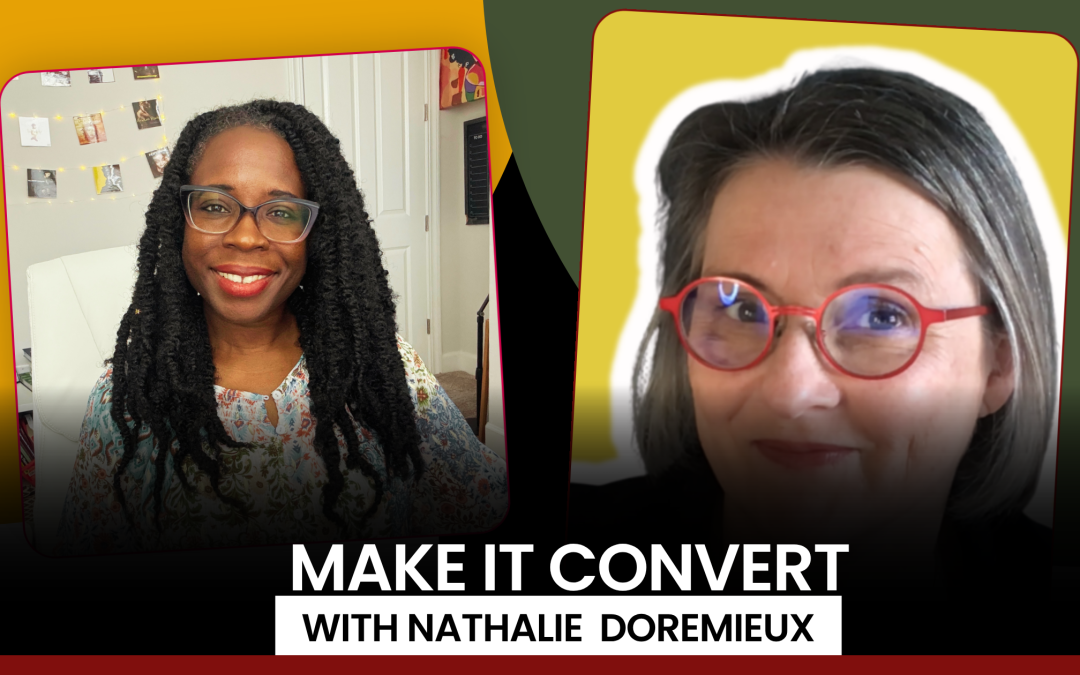
In this episode, I sat down with podcast growth and monetization strategist Nathalie Doremieux to talk about a challenge so many podcasters quietly face: creating consistent, meaningful content… but not seeing real results from it. Together, we unpack what’s often missing between someone listening to your podcast and actually taking the next step to work with you—and how to begin closing that gap in a way that feels both strategic and aligned.
Who Is Nathalie Doremieux?
Nathalie Doremieux is a Podcast Growth & Monetization Strategist who helps podcasters turn engaged listeners into real business results—without needing more content, more ads, or burning themselves out in the process.
After spending over a decade working behind the scenes of 300+ online programs and memberships, Nathalie began to notice a consistent pattern: podcasts were incredibly effective at building trust and authority, but they rarely guided listeners toward meaningful next steps.
That realization shaped the work she does today.
Nathalie helps podcast hosts design simple, ethical monetization strategies that transform their episodes into opportunities for connection, conversation, and long-term growth. Her approach blends podcast strategy, audience psychology, and thoughtful use of automation and AI—always with a focus on preserving what makes podcasting powerful in the first place: genuine human connection.
Podcasting Is Not a Strategy—It’s a Tool
One of the most important distinctions Nathalie made in our conversation is this:
Podcasting itself is not a strategy. It’s a tool.
This is where many podcasters get stuck.
We start a podcast with a message, a desire to share, and a love for creating content. But without a clear strategy behind it, it’s easy to fall into a rhythm of producing episodes without understanding how those episodes connect to our broader business goals.
Nathalie emphasized that visibility alone isn’t enough. It’s not just about being heard—it’s about being heard by the right people, in a way that leads somewhere meaningful.
The Disconnect Between Listeners and Results
A major theme in this episode was the gap between engagement and action.
Many podcasters are building loyal audiences. Their listeners enjoy the content, feel connected, and continue to tune in week after week.
But then… nothing happens.
No inquiries. No sign-ups. No clear movement forward.
Nathalie pointed out that this happens because most podcasts don’t include a structured path for the listener. The content may be valuable, but it isn’t intentionally guiding the listener toward a next step.
And without that, the listener remains passive.
Introducing “Asset Episodes”
One of the most powerful concepts Nathalie shared is what she calls asset episodes.
These are specific, intentional episodes designed to do more than just inform or inspire. They are created with a clear purpose: to help the listener take the next step.
Instead of treating every episode the same, Nathalie encourages podcasters to think of certain episodes as strategic assets within their business.
These episodes:
Address a specific problem your audience is facing
Introduce your framework or approach
Help the listener understand why your solution works
Build trust and credibility in a focused way
She described them as being like lead magnets “on steroids.”
Unlike a traditional PDF or download, these episodes allow your audience to hear your voice, experience your thought process, and connect with your energy—all of which accelerate trust in a way static content simply can’t.
Why More Content Isn’t the Answer
One of the biggest mindset shifts from this conversation is letting go of the idea that more content will solve the problem.
If your podcast isn’t generating results, the solution isn’t:
More episodes
More interviews
More effort
It’s more intention.
Nathalie encouraged thinking with the end in mind and then reverse engineering your content.
Ask yourself:
What does my listener need to understand before they work with me?
What beliefs need to shift?
What clarity do they need about their problem or my solution?
When you create from that place, your episodes begin to serve a deeper purpose.
Rethinking Calls to Action
Another key insight from our conversation was the importance of simplicity when it comes to calls to action.
Many podcasters unintentionally overwhelm their listeners by offering too many next steps:
Follow me here
Subscribe there
Check the show notes
Join this
Instead, Nathalie recommends focusing on one clear, intentional call to action, especially within your asset episodes.
When your listener knows exactly what to do next—and why—it becomes much easier for them to move from passive listening into active engagement.
A Smarter Way to Repurpose Your Podcast
We also explored the idea of repurposing, but from a deeper, more strategic perspective.
While clips, reels, and social posts are helpful, Nathalie emphasized that your most valuable episodes—your asset episodes—should be treated like long-term business tools.
That means:
Sharing them consistently over time
Including them in your email nurture sequences
Using them as part of your lead generation strategy
Revisiting and promoting them regularly
Instead of thinking of your episodes as having a short lifespan, you begin to see them as ongoing assets that continue to serve your business.
Using AI to Deepen Connection (Not Replace It)
One of the more innovative parts of our conversation was how Nathalie is using AI to enhance—not replace—the human connection in podcasting.
She shared how AI can be used to:
Analyze an episode
Ask listeners a few thoughtful questions
Provide personalized responses or insights based on where they are
This creates a more interactive experience for the listener—one where they feel seen and understood, rather than just spoken to.
What stood out most is that the goal isn’t automation for the sake of efficiency.
It’s about creating a bridge—a way for listeners who are ready to engage to move forward in a more meaningful, personalized way.
You Don’t Need More Downloads
Perhaps one of the most freeing takeaways from this conversation is this:
You don’t need a large audience to see results from your podcast.
You need the right people.
When your message is clear, your episodes are intentional, and your strategy is aligned, even a small number of listeners can lead to meaningful connections and opportunities.
It’s not about reaching everyone.
It’s about reaching the people who are ready.
How to Reach Nathalie Doremieux
If this conversation resonated with you and you’re ready to think more strategically about your podcast, Nathalie offers tools and insights to help you bridge the gap between listeners and real business growth.
Nathalie also offers tools designed to help you turn your podcast episodes into lead-generating assets, using thoughtful strategy and smart automation.
Need Help Planning a Podcast?
If you’re ready to grow your show, attract aligned listeners, and create episodes that convert, subscribe for more podcast coaching tips and strategies. Your next great episode starts with a plan.
Podcasting is still one of the most powerful ways to build authority, deepen trust, and create meaningful connection online. But let’s be honest for a moment:
Not everyone should start a podcast in 2026.
That may sound surprising coming from someone who loves podcasting and has been in this space for years, but it’s the truth. I care more about helping people build sustainable, strategic platforms than pushing hype.
There are plenty of voices online telling you to “just start a podcast” as if it’s a magic solution for visibility, income, and influence. But podcasting is not a shortcut. It is not instant growth. It is not effortless attention.
Podcasting can be incredible—but only when it aligns with who you are, how you communicate, and what you’re truly trying to build.
So before you invest time, money, and energy into launching a show, let’s talk honestly about whether podcasting is right for you.
Podcasting Is Powerful—But It’s Slow Media
One of the biggest misconceptions about podcasting is that it creates fast traction.
Usually, it doesn’t.
Podcasting is what I call slow media. It tends to build steadily over time rather than spike overnight. While short-form platforms often reward trends, novelty, and fast-moving content, podcasts grow through consistency and trust.
That means:
Listeners discover you gradually
Relationships deepen over time
Authority compounds episode by episode
Results often come later, not immediately
If you’re looking for instant virality or fast audience growth, podcasting may frustrate you.
That doesn’t mean podcasting is ineffective. Quite the opposite.
It means podcasting rewards patience.
If you can embrace the long game, it can become one of the strongest assets in your business or brand.
If You Hate Long-Form Communication, Pause First
Podcasting is a spoken medium. That sounds obvious, but many people overlook what it actually requires.
You’ll need to enjoy—or at least tolerate—long-form communication.
That might mean:
Teaching ideas clearly
Telling stories
Interviewing guests
Thinking out loud
Holding attention through voice alone
If you dislike hearing your own voice, feel drained by explaining concepts, or strongly prefer writing over speaking, podcasting may not be your best lane.
And that’s okay.
There are many excellent ways to build authority online:
Writing newsletters
Blogging
YouTube tutorials
Instagram content
Courses
Communities
Podcasting is one medium—not the only medium.
Choose the platform that fits your strengths rather than forcing yourself into one that doesn’t.
You Need More Than 10 Episode Ideas
Another common mistake people make is starting a podcast based on a temporary burst of excitement.
They have enough energy for:
Episode 1
Episode 2
Maybe Episode 7
Then they stall.
Why? Because podcasting is not just about what you can say next week.
It’s about what conversation you’re willing to lead for years.
A podcast becomes a body of work. It reflects your ideas, values, expertise, and consistency over time.
Before you start, ask yourself:
Can I talk about this topic for the next two years?
Does this subject naturally generate more ideas?
Am I still curious about it long-term?
Is this connected to my real life or work?
When your topic grows from lived experience, service, expertise, or genuine passion, sustainability becomes much easier.
Who Should Start a Podcast in 2026?
Now let’s talk about who podcasting can be especially powerful for.
1. Thought Leaders
If you have a framework, perspective, method, or message that needs depth, podcasting is excellent.
Some ideas require more than a 30-second reel.
Podcasting gives you space to:
Explain nuance
Build original thought
Share stories behind your ideas
Lead meaningful conversations
Establish intellectual authority
If you want to be known for what you think—not just how you look or what trends you follow—podcasting is valuable.
2. Coaches and Service Providers
If your business depends on trust, podcasting can be gold.
Why?
Because listening is intimate.
When someone hears your voice weekly while driving, walking, cooking, or working, trust builds naturally.
They begin to understand:
How you think
What you value
How you solve problems
Whether they resonate with your style
That kind of relationship often leads to better clients, stronger referrals, and warmer leads.
3. Creators Building Intellectual Property
If you want to write a book, teach a course, create a signature framework, or become a speaker, podcasting is powerful preparation.
Every episode helps you refine your message.
You learn:
Which ideas resonate
How to explain concepts clearly
How to tell stories effectively
How to speak spontaneously
How to develop confidence publicly
In many ways, podcasting becomes rehearsal for larger opportunities.
The Hidden Requirement: Emotional Stamina
This is the part people rarely talk about.
Podcasting requires emotional stamina.
There may be times when you publish an episode and receive:
No comments
Very few downloads
Minimal feedback
Silence
That silence can feel personal if you let it.
You may wonder:
Is anyone listening?
Am I wasting my time?
Does this matter?
Should I quit?
This is where many creators stop.
But growth often happens quietly before it becomes visible.
People may be listening consistently without commenting. Someone may be binging episodes privately. A future client may be watching for months before reaching out.
Podcasting teaches resilience because rewards are not always immediate.
If you need instant validation every time you post, this medium can feel hard.
Strategy Matters More Than Random Talking
Another truth: successful podcasts are rarely random.
You don’t need perfection. You don’t need a radio voice. You don’t need celebrity guests.
But you do need direction.
Ask yourself:
What is this show about?
Who is it for?
Why does it exist?
What transformation does it offer?
How does it connect to my larger goals?
Without strategy, podcasting can become scattered content creation that drains energy.
With strategy, each episode becomes an asset.
Consistency Builds Trust
Consistency does not mean burning yourself out.
It means creating a rhythm your audience can trust.
That might be:
Weekly
Bi-weekly
Monthly
The exact frequency matters less than reliability.
If listeners know you show up regularly, trust grows.
Choose a pace you can sustain in real life.
Too many people launch with unrealistic intensity, then disappear. Slow and steady often wins.
Ask a Better Question
Instead of asking:
Should I start a podcast?
Ask:
Do I want to build authority?
Am I willing to grow slowly?
Do I enjoy speaking and teaching?
Can I commit consistently?
Do I have a message worth developing long-term?
That’s the real decision.
If you are chasing attention alone, podcasting may frustrate you.
If you are building credibility, trust, and substance, podcasting can serve you beautifully.
What If Podcasting Isn’t Right for You?
Then you’ve learned something valuable.
Not starting the wrong project is just as important as starting the right one.
You might be better suited for:
A YouTube channel
A newsletter
Blogging
Public speaking
Consulting content
Social media thought leadership
There is no shame in choosing the medium that matches your wiring.
The goal is not to have a podcast.
The goal is to communicate effectively and build something meaningful.
Final Thoughts
Podcasting in 2026 still matters deeply—but it favors people who understand what it really is.
It is:
A trust-building medium
A long-term authority tool
A platform for thoughtful voices
A discipline of consistency
A body of work built over time
It is not a shortcut.
If that reality energizes you rather than discourages you, podcasting may be exactly right for you.
If it doesn’t, there are other smart paths forward.
And that’s okay too.
Choose the platform that fits your strengths, your message, and the life you actually want to live.
Because the best strategy is not doing what everyone else is doing.
It’s building what you can sustain.
Need Help Planning a Podcast?
If you’re ready to grow your show, attract aligned listeners, and create episodes that convert, subscribe for more podcast coaching tips and strategies. Your next great episode starts with a plan.