What does it really mean to create a safe conversation on a podcast?
In a world where everyone seems to be chasing clips, downloads, and viral moments, it’s easy to forget that podcasting is still one of the most intimate forms of media we have. A voice in someone’s ear. A story shared in real time. A human being trusting another human being enough to open up.
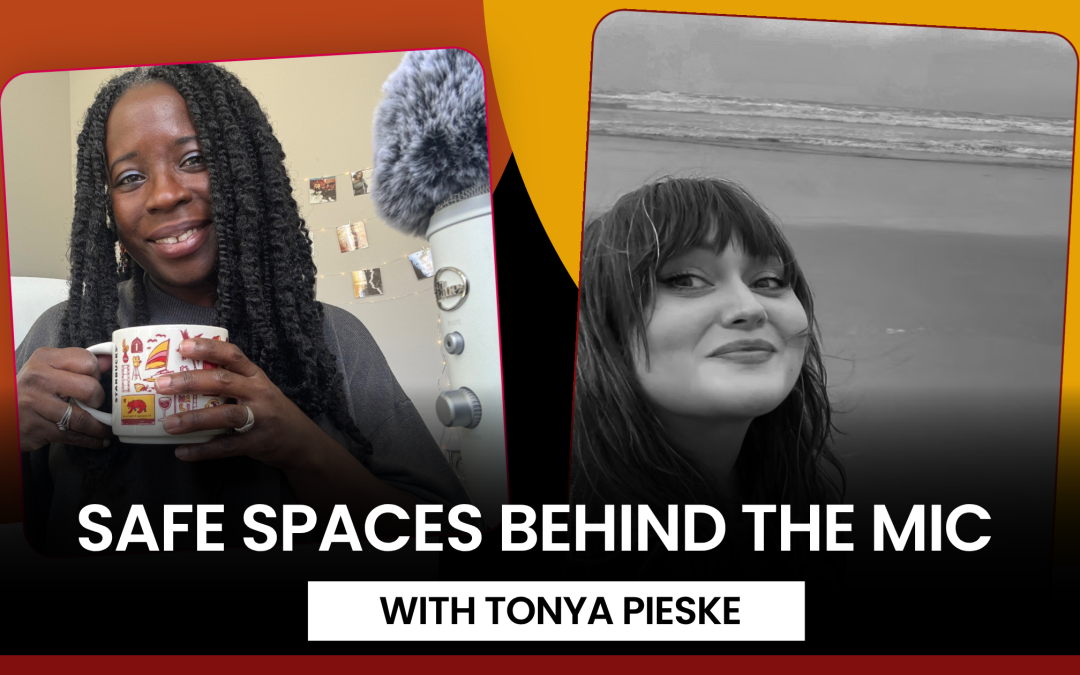
That’s why this recent conversation with Tonya Pieske felt so important.
Tonya is doing something many podcasters overlook: she’s treating storytelling with care. Her show uses a trauma-informed process with guests so that sharing personal stories becomes a grounded, consensual, and emotionally safe experience. Instead of treating people like content, she treats them like people first.
And honestly? That’s the kind of podcasting more of us need.
Who is Tonya Pieske?
Tonya Pieske is a musician, writer, and producer based in Portland, Oregon.
With How to Tell Someone, Tonya blends her lived experience with CPTSD and her background in fostering psychological safety through her nonprofit work. She uses a trauma-informed process with each guest to ensure storytelling is safe, grounded, and consensual.
Her work on the show centers nuance and authenticity, offering a rare space for people to share the stories that shaped them.
She also brings a creative producer’s ear to the podcast, scoring episodes with original music and creating a cinematic listening experience that supports the emotional depth of each story.
Why This Conversation Matters Right Now
Podcasting has grown fast. That’s a beautiful thing.
More voices. More perspectives. More people realizing they don’t need permission to start speaking.
But with growth comes temptation.
It becomes easy to think:
How can I get bigger guests?
How can I get more shocking stories?
How can I make clips that perform?
How can I publish faster?
None of those questions are inherently wrong. But they can distract us from the better questions:
How can I make my guests feel seen?
How can I listen deeply?
How can I create trust?
How can I steward someone else’s story responsibly?
That’s where Tonya’s message lands with power.
She reminded us that podcasting isn’t just production. It’s presence.
What “Holding Space” Actually Means
“Hold space” can sound like one of those trendy phrases people throw around without meaning.
But in podcasting, it matters.
Holding space means creating an environment where someone feels emotionally safe enough to be honest.
It means:
Not rushing them
Not forcing vulnerability
Not interrupting sacred moments
Not sensationalizing pain
Not making their story about your platform
It means you, as the host, become steady.
You don’t need to fix them. You don’t need to impress them. You don’t need to dominate the conversation.
You need to be present.
That kind of hosting is powerful because listeners can feel it.
They know when a guest feels safe. They know when a conversation is performative. They know when something real is happening.
The Responsibility of Interviewing Real Humans
One of the strongest points Tonya made was this:
Not everyone who has a story is a professional storyteller.
That matters.
Many guests are not media-trained. They may be sharing painful memories, life transitions, failures, grief, trauma, or vulnerable truths for the first time publicly.
That means the host carries responsibility.
If you invite someone to open up, you should be prepared to handle what comes with that.
Too many hosts ask deep questions… then emotionally disappear.
They want tears but don’t know what to do with tenderness.
They want honesty but don’t know how to respond with care.
They want the moment—but not the weight of the moment.
That’s not leadership behind the mic.
That’s extraction.
And your audience can feel the difference.
How to Create Safe Guest Conversations
If you’re interviewing guests on your podcast, here are practical ways to lead with care:
1. Give Permission, Not Pressure
Instead of assuming someone must answer everything, offer choice.
Say things like:
“Only share what feels comfortable.”
“We can skip that if needed.”
“Take your time.”
“You don’t have to answer that.”
Freedom creates better conversations than pressure ever will.
2. Send Questions in Advance
Some guests process by thinking ahead. Others calm their nervous system when they know what’s coming.
Sending themes or sample questions can reduce anxiety and increase depth.
Surprise is overrated.
Safety is underrated.
3. Warm Up Before Recording
Don’t hit record instantly like you’re starting a machine.
Talk first.
Ask how they’re doing. Laugh a little. Let the body settle.
Real conversations often begin before the official interview starts.
4. Listen for Emotion, Not Just Soundbites
Many hosts are waiting for their next question instead of listening.
Don’t just listen for facts.
Listen for:
shifts in tone
hesitation
pain
excitement
relief
meaning
Sometimes the real conversation is hiding in one sentence that needs a gentle follow-up.
5. Know When Not to Push
If someone gets quiet, shaky, distant, or overwhelmed, you don’t always need to “go deeper.”
Sometimes wisdom is knowing when to move on.
Not every door must be opened publicly.
Podcasting Is Not Content Churn
One phrase from this conversation stood out: content churn.
That endless machine of producing for producing’s sake.
Post more. Clip more. Publish more. React more.
But if your process strips away humanity, what are you building?
Podcasting can be strategic and soulful.
You can care about growth and care about people.
You can be professional and compassionate.
The best brands of the future won’t just be louder.
They’ll be more human.
Tonya’s One-Woman Studio Wisdom
I also loved hearing Tonya talk about building her show independently.
She produces her own audio, scores the episodes with music, edits long-form interviews, and creates cinematic soundscapes.
That’s real creative labor.
And her honesty was refreshing: it takes longer than you think.
Every podcaster needs to hear that.
Too many people assume everyone else is moving effortlessly.
They’re not.
Good podcasting takes time, intention, editing, thoughtfulness, and energy.
So if your process feels slower than expected, you’re normal.
If your first episodes take forever, you’re normal.
If you’re learning as you go, you’re normal.
Build a Podcast Around Your Capacity
Another gem from Tonya: know your capacity.
She shared that weekly podcasting doesn’t fit her life—and that’s okay.
This is freedom many creators need to hear.
You do not need to copy someone else’s cadence.
You can:
publish seasons
batch record
release monthly
take breaks
create shorter formats
slow down intentionally
Consistency matters, yes.
But sustainable consistency matters more.
A burnt-out podcaster with a schedule is still burnt out.
Build around your real life.
If You’re a Faith-Driven or Purpose-Led Host
For many of us, podcasting is ministry, mission, service, or calling.
That means people are not metrics.
They are souls. Stories. Lives.
When someone trusts you enough to share pain, growth, joy, or truth—you’ve been given stewardship.
Treat that with reverence.
Sometimes the most powerful thing you can do as a host is not preach louder or perform harder.
Sometimes it’s listening well.
Questions to Ask Yourself Before Your Next Interview
Before you hit record again, ask:
Does this guest feel safe with me?
Am I trying to get content or create connection?
Have I prepared emotionally, not just technically?
Can I stay present if the conversation gets real?
Am I honoring the person, not just the episode?
Those questions can transform your show.
Final Encouragement
You don’t need the fanciest microphone to become a memorable host.
You don’t need celebrity guests.
You don’t need controversy.
You need care.
You need curiosity.
You need emotional presence.
You need integrity behind the mic.
Because long after people forget titles and thumbnails, they remember how a conversation made them feel.
And when guests feel safe, listeners feel it too.
That’s the kind of podcasting that lasts.
Reach out to Tonya
In this conversation with Tonya Pieske, we explore trauma-informed storytelling, ethical interviewing, creative DIY podcasting, and how to help guests share their stories safely and meaningfully.
If you’re building a podcast with purpose—not just noise—this episode is for you.
Why alignment—not hustle—is the key to sustainable podcasting and business growth
A Different Way to Think About Podcasting
There’s a quiet shift happening in the podcasting world right now.
For years, the message has been loud and clear: be consistent, show up, produce more content, grow your audience, monetize. And while none of those things are wrong, they’ve often been disconnected from something deeper—your actual life.
What if your podcast didn’t have to compete with your life… but could actually support it?
What if your content didn’t feel like another obligation, but instead felt like an extension of who you already are?
That’s exactly what this conversation explores.
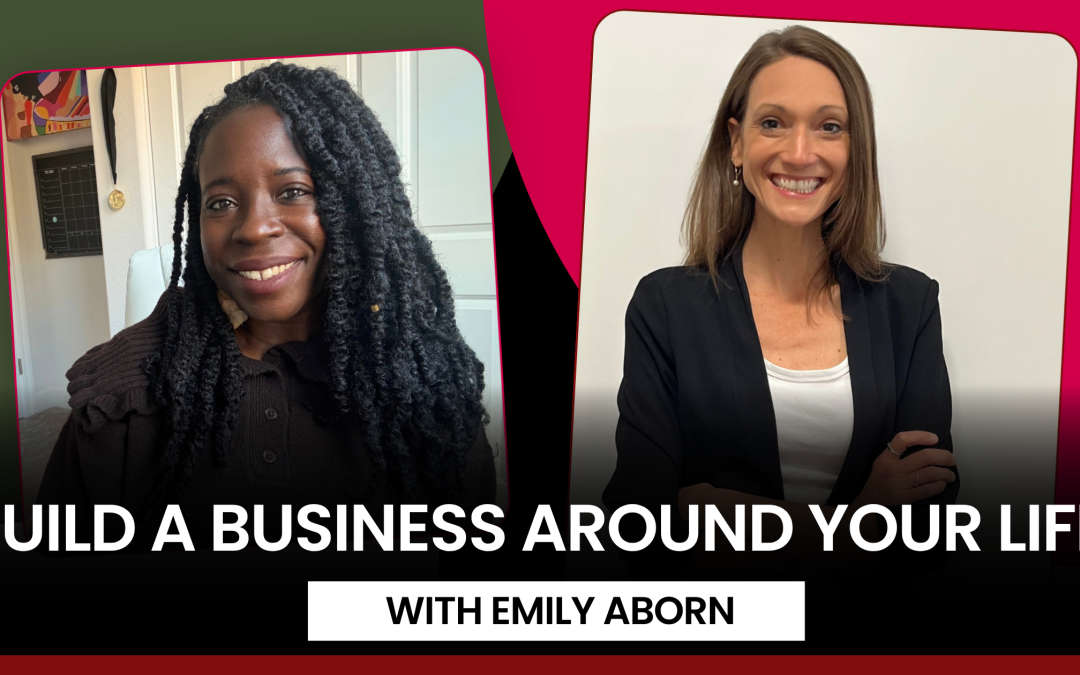
Who Is Emily Aborn?
Emily Aborn is a Small Business Copywriter, Speaker, and Podcast Host. She’s been an entrepreneur for over a decade, with experience running brick-and-mortar and online businesses. She’s written for over 120 industries as a copywriter, bringing personality, creativity, and a distinct message to life as she guides others to build relationship-based, authentic (REALLY authentic, not just buzzword authentic) businesses. For fun, she enjoys word games, reading, listening to podcasts, and hiking with her husband, Jason and local friends.
Your Business Should Reflect Your Life
One of the most powerful themes in this conversation is simple—but not always easy to live out:
Your business should reflect your life—not replace it.
So many entrepreneurs, especially in the early stages, build their business around what they think they should be doing. They follow strategies, templates, and trends without ever stopping to ask:
Does this actually fit my life?
Does this support what I value most?
Or am I just keeping up?
Emily shared how, for a long time, her business didn’t reflect her priorities at all. It was constant work, constant output, and very little margin for rest or relationships. And eventually, that kind of pace catches up with you.
Not always in dramatic burnout—but in subtle exhaustion. Disconnection. That quiet feeling of, “This isn’t sustainable.”
The shift came when she started intentionally building her business around what mattered most: time, family, rest, and space to just be.
And that changes everything.
There Is No Perfect Balance—Only Seasons
Let’s be honest: balance is one of those words that sounds good but rarely feels real.
Instead of chasing perfect balance, Emily reframed it as seasons.
Some seasons are full. Busy. Demanding. Stretching you in ways you didn’t expect.
Other seasons are slower. Restful. Spacious.
The key is recognizing which season you’re in—and giving yourself permission to be there without guilt.
There may be times when your podcast takes more energy. When you’re creating, producing, showing up consistently, and building something meaningful.
And then there are times when you need to step back. To rest. To refill.
Both are necessary.
Podcasting, especially, requires a lot of output—mental, emotional, and creative. If you don’t build in space to receive, reflect, and rest, you’ll eventually run dry.
So instead of forcing yourself into a rigid routine that never flexes, ask:
What season am I in right now?
What do I actually have the capacity for?
That awareness alone can keep you from burnout.
Why Personality Matters More Than Ever
In a world where AI can generate content in seconds, it’s easy to wonder:
“Does my voice even matter anymore?”
The answer is yes—more than ever.
One of Emily’s strongest convictions as a copywriter is that personality cannot be outsourced.
Yes, tools can help. Yes, technology can support your process. But there is something deeply human about the way you think, feel, and communicate—and that’s what people connect with.
You can feel the difference.
You’ve probably read something before and thought, “This sounds… fine. But it doesn’t feel like anything.”
That’s the gap.
Real connection happens when your words carry your voice, your experiences, your perspective. Not a polished version of what you think you should sound like—but the real you.
And that applies directly to podcasting.
Your voice, your stories, your way of seeing the world—that’s the thing that draws people in. Not perfection. Not performance.
Personality.
Podcasting as a Tool for Growth
Podcasting isn’t just a platform—it’s a process.
It’s one of the most powerful tools you have for developing your voice, refining your message, and growing as a communicator.
But only if you’re willing to engage with it honestly.
That means:
Listening back to your episodes (even when it’s uncomfortable)
Noticing your patterns
Paying attention to how you show up
Emily shared a simple but relatable example—realizing she repeated the same phrase in every interview. It became a small moment of awareness, but also a turning point for growth.
Because when you hear yourself, you learn yourself.
And over time, that awareness builds confidence.
You start to trust your voice more. You refine how you ask questions. You deepen your conversations.
Podcasting becomes less about “getting it right” and more about growing into who you are.
Consistency Without Burnout
Let’s talk about consistency—the word everyone loves to talk about, but few people define well.
Consistency doesn’t mean pushing yourself past your limits.
It doesn’t mean producing content at the expense of your well-being.
It means creating a rhythm that you can actually sustain.
For Emily, consistency became easier when it stopped being a decision and started becoming part of her lifestyle.
It wasn’t, “Should I record today?”
It was, “This is what I do.”
That level of commitment builds momentum—but it has to be rooted in something realistic.
If your schedule, energy, or life doesn’t support weekly episodes, then forcing that pace isn’t consistency—it’s pressure.
Instead, define consistency on your terms:
What pace feels sustainable for me?
What rhythm can I maintain long-term?
That’s where real growth happens.
Repurposing: Make Your Content Work for You
One of the most practical (and freeing) parts of this conversation is how to think about repurposing content.
Most people hear “repurposing” and immediately think:
“I need to turn this into posts, clips, and reels.”
And yes, that’s part of it.
But it’s also much bigger than that.
Repurposing is about creating cohesion.
It’s about choosing a theme or message and allowing it to show up across your life and business in natural ways.
For example, if you record a podcast episode about rest, that theme can carry into:
Your social media posts
Your email newsletter
Conversations you’re having
Stories from your everyday life
And over time, people begin to associate you with that message.
Not because you said it once—but because you lived it, shared it, and reinforced it consistently.
That’s how you build connection.
That’s how you become known for something meaningful.
Your Life Is Not Separate From Your Content
This might be the biggest mindset shift of all:
Your life is not separate from your content.
You don’t have to constantly create something new.
You don’t have to live one life and then “perform” another online.
Instead, you can integrate the two.
That doesn’t mean oversharing or exposing everything. It means allowing your real experiences, observations, and moments to inform what you create.
A conversation at the grocery store.
A realization during a walk.
A season you’re walking through.
All of these can become meaningful content—not because they’re dramatic, but because they’re real.
And when your podcast is rooted in your real life, it becomes easier to sustain.
Because you’re not forcing content.
You’re living it.
Build Around Life—Not the Other Way Around
At the end of the day, this is what it comes down to:
You don’t need a bigger strategy.
You need alignment.
When your podcast reflects your values, your rhythms, and your real life:
Consistency becomes easier
Content feels more natural
Your voice becomes clearer
And your audience connects more deeply
You’re no longer chasing growth—you’re building something that actually fits.
And that kind of business doesn’t just grow.
It lasts.
Reach out to Emily
If you’re looking to bring more clarity, personality, and connection into your messaging, you can learn more about Emily and her work on her website: https://emilyaborn.com/
If you’ve been thinking about starting a podcast but find yourself spinning in circles, unsure where to start, you’re not alone. So many aspiring podcasters get stuck before they even hit record—not because they lack talent or ideas, but because they don’t have a clear podcast launch process. And honestly, it’s completely normal to feel overwhelmed at first. There’s planning, recording, editing, publishing, marketing… it can feel like a lot all at once.
https://kristenanette.comBefore we dive in, I want to take a moment to shout out one of our incredible members in the Christian Women Podcasters Network, Kristen Brock, who hosts Jesus, Justice & Mercy. Her podcast explores the tension between the faith we’ve inherited and the justice-driven Jesus we want to follow. Kristen talks about faith, justice, and discipleship with honesty, courage, and compassion—engaging Scripture, history, and lived experience. If you’re wrestling with inherited faith or questions about how justice intersects with the Gospel, Kristen’s work is inspiring. You can find her work at KristenAnette.com.
I love highlighting members like Kristen because their contributions to our space, our Skool membership, and our podcasting community are invaluable. And I want to remind you that you can join our mailing list at SoulPodcasting.com to stay updated about opportunities to join our network or just hop in and be part of our movement—no matter your faith, gender, or background.
So, grab your favorite cup of tea, coffee, or any beverage you love. Let’s settle in, and I’m going to walk you through my 4-step framework for a confident podcast launch. There’s also an accompanying video for this episode in the show notes, so you can follow along visually if you prefer.
Step 1: Plan – Laying the Foundation for Your Podcast Launch
Planning is where most people stumble. It might seem boring compared to the excitement of recording your first episode, but I promise you—it’s essential. Imagine trying to build a house without a foundation. You might get a few walls up, maybe even the roof, but eventually, it will all crumble. A podcast is no different. The planning phase is your foundation. Without it, the rest of your podcast journey becomes unnecessarily difficult.
So what does planning look like in a podcast launch? First, you need to clarify your audience. Who is your ideal listener? Who are you speaking to, and why will they care about your content? Think deeply about the people you want to reach. This isn’t about making everyone happy—it’s about making the right impact on the right people.
Next, we look at branding. This is more than just a logo or a color palette. It’s the voice, tone, and personality of your show. Your branding is what will make your podcast feel cohesive and professional. It’s also how your audience will recognize and remember you.
Then there are the tools and logistics. What recording equipment will you use? Will you podcast from home, a studio, or a hybrid setup? How will you organize your episodes and workflow? Having these practical systems in place from the beginning will save you headaches later.
Finally, we plan your show structure and topics. Will your episodes be interviews, solo episodes, or a mix? How often will you release episodes? What themes will guide your content? Remember, this is about strategic brainstorming, not perfection. You’re setting a strong foundation, not locking yourself into a rigid formula.
Planning is about clarity, intention, and creating a strong base for everything that comes next. Without this step, you risk rushing, overproducing, or spinning your wheels endlessly. When you start here, everything else falls into place.
Step 2: Produce – Creating Content That Resonates
Once you’ve laid the foundation, it’s time to move into production. This is where your podcast begins to take tangible shape. You move from ideas to content, from planning to action. Producing is about recording, editing, and shaping your episodes in a way that reflects the clarity and purpose you set during planning.
Production is also where many creators experience burnout. There’s a lot to juggle—recording sessions, editing, writing show notes, creating visuals, and scheduling releases. That’s why I always emphasize the importance of finding a production routine that works for you. Some podcasters thrive by editing and producing everything themselves. Others bring in a producer or editor to lighten the load. Both approaches are valid. The key is consistency.
During production, you also need to think about episode flow and storytelling. Each episode should have a clear purpose and deliver value to your audience. Your intro, main content, and outro should feel cohesive. Remember, you’re not just recording audio; you’re creating an experience for your listener.
If you enjoy producing, this stage can feel meditative. For me, I love diving into episodes, shaping them, and making them resonate. But even if it feels challenging, remember that production is where your podcast becomes real. It’s the bridge between planning and sharing your message with the world.
Step 3: Launch – Sharing Your Podcast with the World
Here’s where the magic happens: launch day. All the planning and producing work leads up to this moment. Your podcast is ready to be heard, and it’s time to share it with your audience. A successful podcast launch is intentional, strategic, and celebratory.
First, submit your show to major directories like Apple Podcasts, Spotify, and Google Podcasts. Make sure your artwork, show description, and episode titles are polished. These first impressions matter more than you think.
Next, it’s time to promote your launch. Share it with your email list, on social media, in your communities, and with friends and family. Consider using short clips or audiograms to generate excitement. If you have a network, like the Christian Women Podcasters Network or our Skool community, leverage it to amplify your reach.
Launch isn’t just one day—it’s launch week. You can drip content, share behind-the-scenes stories, or highlight key episodes to build momentum. The goal is to get your first listeners, feedback, and engagement so that you can refine and grow.
I also want to stress: a launch doesn’t have to be perfect. Done is better than perfect. Your audience doesn’t expect a flawless show on day one. They want authenticity, value, and connection. And your launch is your invitation to give them exactly that.
Step 4: Grow – Sustaining and Scaling Your Podcast
The fourth step is often overlooked, but it’s the most important for long-term success: growth. Launching your podcast is just the beginning. If you want to turn it into a sustainable platform, you need to focus on retention, marketing, and scaling.
This is where you think beyond individual episodes and focus on strategic growth. How do you keep your audience coming back? How do you expand your reach? How do you leverage content, SEO, social media, and collaborations to grow your podcast’s visibility?
Growth also involves monetization strategies if that’s part of your plan. You might explore sponsorships, partnerships, or premium content. But even if monetization isn’t your goal, growth is about deepening your impact and reach.
This phase is ongoing. A podcast doesn’t grow overnight. It requires consistency, engagement, and continual improvement. The more intentional you are with this step, the more your podcast can evolve into something meaningful, influential, and sustainable.
Wrapping Up: Take Action
If you’re feeling inspired to finally take the next step, I want you to know that you don’t have to do it alone. You can download the Launch Confidently Podcasting Checklist and companion ebook (link in the show notes) to guide you through each step. There’s also an accompanying video to follow along visually if you prefer.
And if you want direct support, you can always access me for private coaching, or join our Skool and Christian Women Podcasters Network, where we provide community, guidance, and accountability for podcasters just like you.
Launching a podcast is a journey, but with the right framework, clarity, and support, it doesn’t have to be overwhelming. Remember: plan with intention, produce consistently, launch strategically, and grow thoughtfully. Those are the four steps that will help you go from idea to a podcast that truly resonates.
So, grab your notebook, make a plan, and take the first step today. Your podcast—and your audience—is waiting.
There’s a moment many podcasters eventually face—even if they don’t say it out loud. The episodes are consistent. The conversations are good. People are listening. And yet… when it comes to actual business growth, things feel a little unclear. Maybe even stagnant.
That’s the tension a lot of us are quietly navigating.
In my conversation with Megan Dougherty, that disconnect really came into focus—but in a way that felt clarifying, not discouraging. Megan brings a perspective that shifts how we think about podcasting altogether. She reminds us that a podcast isn’t the business—it’s a tool. And like any tool, it only works as well as the intention behind it.
Megan and her team also build podcast networks for niche marketing, publishing, and PR companies, as well as coaches and consultants who want their podcasts to actually support their business goals. In 2021, her company, One Stone Creative, developed the Business Podcast Blueprint—a framework designed to help podcasters create and optimize shows for measurable business value.
She currently lives in Western Quebec with her spouse, two cats, five chickens, and over forty thriving houseplants. And in her spare time, she enjoys making things from scratch that most of us would probably just buy from the store—which honestly feels very on-brand for how she approaches her work: thoughtful, hands-on, and intentional.
A Podcast Without a Clear Purpose Will Start to Drift
One of the things Megan said that really stood out to me is this idea that a podcast needs a job. Not a vague intention, not a general hope—but a clear role within your business.
A lot of us start podcasts because we want to share, connect, or grow an audience. And those are all good things. But without something more specific guiding us, it’s easy to start second-guessing every decision. Should I have guests? Should I be posting more? Should I be focused on downloads? Should I be monetizing?
Megan’s framework simplifies that by identifying five main reasons a business podcast exists: relationship building, audience engagement, thought leadership, conversion, and content creation. Your podcast might touch on all of these, but she encourages you to choose one as your primary focus.
And once you do, things start to click into place.
If your goal is relationship building, then your guest strategy becomes clear. If your goal is thought leadership, you might lean more into solo episodes. If your goal is content creation, then you start thinking about how each episode can be repurposed across your platforms.
Instead of trying to do everything, you start doing the right things.
The Metrics That Can Lead You in the Wrong Direction
We also talked about downloads—which, let’s be honest, can feel like the ultimate scoreboard in podcasting.
But Megan gently pushes back on that. She explains that for most business owners, downloads don’t have a direct line to revenue. You can have a large audience and still struggle to convert, or you can have a smaller, more aligned audience and see real business growth.
That perspective alone can be freeing.
Because it shifts the focus from “How many people are listening?” to “Are the right people listening—and what’s happening because of it?”
Along the same lines, Megan also addressed something so many podcasters think about early on: monetization. How do I get sponsors? When does the podcast start making money?
Her answer is refreshingly straightforward. If you already have a business, that is your monetization. Your podcast isn’t there to replace your business—it’s there to support it. It helps build trust, strengthen your message, and create pathways for people to work with you.
That shift in perspective can save a lot of time and frustration.
Why So Many Podcasts Lose Momentum
If you’ve ever started a podcast—or even thought about starting one—you’ve probably noticed how many shows begin strong and then slowly fade.
Megan doesn’t see that as a motivation problem. She sees it as a clarity problem.
When you don’t know what success looks like, it’s hard to know if what you’re doing is working. And when that uncertainty lingers, it can start to wear on you.
That’s why she encourages podcasters to define success in a way that actually makes sense for their business. Not based on industry standards, not based on what someone else is doing—but based on what would make the podcast feel worthwhile to you.
And just as importantly, to give that goal a timeline. Because without a timeframe, it’s easy to feel like you’re endlessly waiting for something to click.
A Simpler Way to Get Started (or Start Again)
One of the most practical things Megan shared was her approach to starting a podcast: don’t commit to forever.
Instead, start with a season.
Eight to twelve episodes. One clear goal. A defined timeframe.
That’s it.
At the end of that season, you can step back and evaluate. Did you enjoy it? Did it serve its purpose? Do you want to continue, adjust, or try something different?
There’s something really freeing about that approach. It removes the pressure to “keep going no matter what” and replaces it with something more intentional.
You’re not quitting—you’re completing.
Seeing Guests Differently
We also touched on something I think a lot of podcasters overlook: the role of guests.
Megan encourages us to think beyond the content itself and consider the relationship being built. For many business owners, especially in the early stages, guest interviews can become a powerful way to connect with potential collaborators, referral partners, or even clients.
There’s something about a podcast invitation that opens doors. It creates a natural space for conversation that feels more meaningful than a cold outreach or a quick networking message.
And when those conversations are approached with intention, they can lead to opportunities that extend far beyond the episode.
Defining Success on Your Own Terms
If there’s one thread that runs through everything Megan shared, it’s this idea of clarity.
What does success actually look like for your podcast?
Not in general. Not according to someone else’s standards. But for your business, your life, your goals.
That might look like a certain number of client inquiries, a handful of strong referral relationships, or simply a more consistent and sustainable content process.
Whatever it is, naming it matters.
Because once you define success, you can start building toward it—on purpose.
Bringing Strategy Back Into the Conversation
What I appreciated most about this conversation with Megan is how it brings strategy back into the center of podcasting.
Not in a rigid or overwhelming way—but in a way that feels grounding.
It’s not about doing more. It’s about doing what matters.
And for anyone who has been podcasting without seeing the results they hoped for, that’s actually really good news. Because it means you don’t need to start over or work harder.
Podcasting has become one of the most powerful storytelling platforms of our time. What began as a niche medium has grown into a global network of conversations, ideas, and communities. Today, millions of listeners tune in daily to hear stories, learn new perspectives, and connect with voices they may never encounter otherwise.
And one thing is very clear: women are listening.
Yet even with the tremendous growth of podcasting, there’s still a noticeable gap when it comes to women podcasters—particularly when we look at the shows that receive the most attention, visibility, and influence.
As someone who has been podcasting since 2005, I’ve had the unique opportunity to watch the medium evolve from its early days into the vibrant industry it is today. Over those years, I’ve seen incredible creators emerge, communities form, and new voices find their way to the microphone.
But I’ve also noticed something that the research confirms: we need more women podcasters.
Not because women are incapable of success in podcasting—but because the systems that amplify voices don’t always distribute opportunity equally.
Let’s talk about what the data shows and why this moment is an important one for women in podcasting.
Women Are a Powerful Podcast Audience
One of the most fascinating aspects of the podcast industry is how engaged listeners are. Podcast audiences tend to be curious, thoughtful, and deeply invested in the shows they follow.
Research from Edison Research and SiriusXM Media indicates that women now make up about half of podcast listeners in the United States.
That’s significant.
It means that millions of women are regularly tuning in to hear stories, conversations, interviews, and insights from podcast hosts. Women are discovering new ideas, building communities, and supporting creators they believe in.
In other words, women are already a massive part of the podcast ecosystem.
But here’s where things get interesting.
Even though women represent a huge portion of listeners, the number of women podcasters—especially among the most visible shows—remains much smaller.
The Representation Gap in Podcast Hosting
When researchers analyzed hundreds of top-ranked podcasts, they found that only about one-third of podcast hosts are women.
That means that roughly two-thirds of the voices shaping many major podcast conversations are male.
This doesn’t mean men shouldn’t host podcasts. Podcasting thrives when there is diversity of thought and perspective across the board.
However, the numbers suggest that many women’s perspectives, experiences, and insights are still underrepresented in high-visibility spaces.
And when we look specifically at women of color, the representation gap becomes even more pronounced.
Black women, Latina women, Asian women, and Indigenous women bring powerful stories and cultural perspectives to the microphone. Yet historically, they have had fewer opportunities to access the same platforms and amplification.
When certain voices are missing from a conversation, the conversation itself becomes smaller.
The beauty of podcasting is that it has the potential to change that.
Why Women Podcasters Matter
Podcasting is more than entertainment. It’s a platform for sharing ideas, shaping culture, and creating community.
When more women step into podcasting, several important things happen.
1. More Stories Are Told
Women bring lived experiences that are often different from those traditionally represented in media.
From motherhood and entrepreneurship to leadership, faith, health, creativity, and midlife transitions, women have unique perspectives worth hearing.
The more women podcasters there are, the more stories become available to listeners who may be searching for voices that resonate with their own lives.
2. Representation Expands Opportunities
When listeners hear women confidently hosting shows, interviewing experts, and leading meaningful discussions, it sends a powerful signal: this space belongs to them too.
Representation doesn’t just impact the present—it shapes the next generation of creators.
Young women and girls who see female podcasters thriving may feel inspired to start their own shows, share their own ideas, and contribute to the conversation.
3. Podcast Guests Become More Diverse
Research also reveals something fascinating about podcast guest bookings.
Studies show that shows hosted by women tend to invite more women guests than shows hosted exclusively by men.
This means that increasing the number of women podcasters can naturally lead to a wider range of voices appearing across the podcast landscape.
More hosts equals more opportunities for more experts, creators, and storytellers to be heard.
The Good News: Podcasting Is Accessible
Despite the representation gap, podcasting remains one of the most accessible forms of media creation available today.
Unlike traditional broadcasting, podcasting does not require a network deal, expensive studio time, or corporate approval.
With basic equipment, a clear message, and a willingness to learn, almost anyone can start a podcast.
That accessibility is one of the reasons the medium continues to grow.
Women who have expertise, experiences, or passions to share can step into the space and begin building their own platforms.
Every new voice adds something valuable to the podcasting ecosystem.
Women Leaders in the Podcasting Industry
Another encouraging aspect of the podcasting world is the number of women who are building organizations, communities, and businesses that support podcasters.
For example, Kathy Barron, founder of Women Who Podcast Magazine, created a publication dedicated to celebrating and highlighting independent women podcasters.
Her work recognizes the creativity, commitment, and perseverance that so many women bring to this medium. Through the magazine and its related initiatives, she is building opportunities for networking, mentorship, and recognition.
Another inspiring leader is Megan Dougherty, founder of One Stone Creative, a boutique podcast production agency. Megan and her team help businesses use podcasting strategically to build authority, grow audiences, and strengthen their marketing ecosystems.
Leaders like these demonstrate that podcasting isn’t just about hosting a show—it’s about building systems that help others succeed.
And when women support other women in the industry, the entire podcasting community becomes stronger.
Podcasting as a Tool for Impact
Podcasting can also be a powerful tool for social good.
Many podcasters use their platforms to spotlight charities, nonprofit organizations, and initiatives that are working to improve lives and communities.
One example is Podcasathon, a global initiative where thousands of podcasts dedicate episodes to highlighting charitable causes.
By using their microphones to raise awareness, podcasters can help introduce listeners to organizations doing important work around the world.
When creators use their voices intentionally, podcasting becomes more than content creation—it becomes a vehicle for positive change.
How You Can Support Women Podcasters
Whether you are a podcast creator or simply someone who enjoys listening to podcasts, there are many ways to support women’s voices in the space.
Listen to Women-Led Shows
One of the simplest ways to support women podcasters is to actively seek out and listen to their shows.
Discover new voices, explore different perspectives, and recommend those podcasts to others.
Word-of-mouth is one of the most powerful growth tools in podcasting.
Share and Promote
If you enjoy a podcast hosted by a woman, share it.
Post about it on social media, recommend it to friends, or leave a review in your podcast app.
These small actions can help podcasts reach new audiences.
Invite Women as Guests
If you host a podcast yourself, take time to evaluate your guest lineup.
Are you inviting a diverse range of voices?
Being intentional about guest representation can significantly impact whose ideas and expertise are amplified.
Encourage New Voices
Sometimes the biggest barrier preventing women from starting podcasts is confidence.
Encouraging a friend, colleague, or community member to share their voice can make a meaningful difference.
Podcasting grows stronger every time someone new decides their story is worth telling.
The Future of Women Podcasters
The podcast industry is still evolving.
Every year, new creators enter the space, new audiences discover the medium, and new technologies make podcasting even more accessible.
That means the future of podcasting is still being written.
Women have an incredible opportunity to shape that future.
By stepping into leadership roles, starting podcasts, building communities, and supporting one another, women podcasters can help create a more inclusive and dynamic media landscape.
The goal isn’t competition—it’s expansion.
More voices. More stories. More perspectives.
That’s what makes podcasting powerful.
A Final Invitation
If you’ve ever thought about starting a podcast—or if you already have one and want to grow—it may be the perfect time to step forward.
Your voice matters.
Your ideas matter.
And someone out there may be waiting to hear exactly what you have to say.
The world doesn’t need fewer voices.
It needs more women podcasters willing to share their experiences, wisdom, and creativity.
And every time a woman presses record, the conversation becomes richer for all of us.
If you host an interview-style podcast, one of the most important decisions you’ll make is which podcast guests you invite onto your show.
The right guest can completely transform an episode. They bring perspective you don’t have, stories your audience hasn’t heard before, and insights that expand the conversation in meaningful ways.
But the wrong guest?
They can leave an interview feeling flat, force you into hours of editing, and ultimately create an episode that doesn’t move your audience.
After podcasting for more than twenty years, I’ve learned something important: booking great podcast guests isn’t about popularity. It’s about alignment, preparation, and intention.
Let’s explore how to find, invite, and prepare the right guests so your podcast interviews truly elevate your show.
Why the Right Podcast Guests Matter
When you invite someone onto your podcast, you’re doing more than filling a time slot.
You’re inviting them into your audience’s trust.
Your listeners have chosen to spend time with your voice and your ideas. When you introduce podcast guests, you’re essentially saying:
“This person is worth your attention.”
That’s a powerful endorsement.
The best podcast guests bring three things to the conversation:
1. Fresh Perspective
Great guests bring insights your audience hasn’t heard before. They expand the conversation and introduce new ways of thinking.
2. Credibility
Guests can add authority to your podcast, especially when they have experience or expertise that complements your own.
3. Story
Stories are what make podcast interviews memorable. Guests who share authentic experiences create emotional connection with listeners.
When all three elements come together, an episode can feel electric.
Alignment Is More Important Than Popularity
Many new podcasters assume that the best podcast guests are the most well-known ones.
But popularity doesn’t always translate to meaningful conversation.
In fact, some of the most powerful podcast interviews happen with guests who may not have huge followings but deeply understand your audience.
Instead of asking:
“Is this person famous enough?”
Ask better questions:
Does this person understand my listener’s challenges?
Does their work align with the transformation my podcast promises?
Will this conversation help my audience think differently?
When your podcast guests are aligned with your audience’s needs, the conversation naturally becomes more engaging.
Where to Find Podcast Guests
The good news is that finding potential podcast guests isn’t difficult. The real skill is learning how to identify the right ones.
Here are several places to start your search.
Social Media Platforms
Platforms like LinkedIn, Instagram, and Twitter are full of people sharing thoughtful ideas within specific niches.
Instead of scrolling casually, pay attention to:
Who consistently shares educational content
Who engages meaningfully in comments
Who demonstrates expertise through storytelling
These individuals often make excellent podcast guests because they’re already comfortable sharing ideas publicly.
Online Communities
Industry communities can be incredible places to discover potential podcast guests.
Look for spaces such as:
Professional mastermind groups
Niche Facebook communities
Industry-specific forums
Online conferences and summits
Many talented experts contribute regularly in these communities without aggressively promoting themselves. That often signals authenticity and depth.
Podcast Guest Matching Platforms
There are also platforms designed specifically to connect podcasters with potential guests.
One example is Podmatch, which matches podcasters and guests based on niche compatibility rather than simply popularity.
Tools like this can streamline the discovery process, but they should never replace your discernment. The platform helps you find people, but you still decide whether they’re the right fit for your show.
How to Invite Podcast Guests Professionally
Once you identify potential podcast guests, the next step is reaching out.
Many podcasters overthink this part, but the best outreach messages are actually simple and thoughtful.
A strong invitation usually includes three elements:
Personalization
Let the potential guest know why you’re reaching out specifically to them.
Reference something meaningful, such as:
A recent article they wrote
A podcast episode they recorded
A project they recently launched
This shows that your message isn’t part of a mass outreach campaign.
Clarity
Explain your podcast clearly.
Include information such as:
What your podcast is about
Who your audience is
Why their expertise would benefit your listeners
When potential podcast guests understand your purpose, they’re far more likely to accept the invitation.
Respect for Their Time
Busy professionals receive many invitations.
Make it easy for them to say yes by offering:
Flexible scheduling options
Clear expectations for the interview
A concise and respectful message
Professionalism builds trust before the conversation even begins.
Preparing for Meaningful Podcast Interviews
Booking great podcast guests is only half the equation.
Preparation is what transforms a simple interview into a powerful conversation.
Here are a few ways to prepare effectively.
Research Their Work
Before the interview, spend time exploring your guest’s previous content.
Look for:
Topics they frequently discuss
Ideas they repeat often
Perspectives they rarely explore
Your goal is to guide the conversation somewhere deeper than their typical interviews.
Create a Conversation Arc
Instead of a random list of questions, think about the natural flow of the episode.
A helpful structure might look like this:
Opening: Introduce the guest’s story
Exploration: Discuss their ideas and experiences
Insight: Highlight the most meaningful lessons
Closing: Offer practical takeaways for listeners
This approach keeps the conversation intentional without feeling scripted.
Stay Present
While preparation matters, the best interviews still leave room for spontaneity.
Listen closely during the conversation. Sometimes the most powerful moments happen when you follow an unexpected thread.
Great podcast hosts balance preparation with curiosity.
The Hidden Key to Better Podcast Guests
There’s one more important truth about podcast guests that many hosts overlook.
Your podcast foundation matters.
Even the best guests can’t rescue a podcast that lacks clarity about its purpose or audience.
If your show doesn’t have a clear direction, interviews can feel scattered rather than strategic.
Before focusing heavily on guest booking, ask yourself:
What transformation does my podcast offer listeners?
What themes consistently shape my episodes?
How do my interviews support the larger vision of the show?
When your foundation is strong, every guest becomes part of a bigger story.
Building a Podcast That Attracts Great Guests
Interestingly, great podcast guests are often attracted to podcasts that feel thoughtful and intentional.
Experts enjoy conversations where they can share meaningful insights rather than repeating the same talking points.
When your podcast demonstrates:
Clear audience focus
Respectful interview preparation
Genuine curiosity
You naturally become a host that great guests want to collaborate with.
Final Thoughts on Choosing Podcast Guests
Choosing the right podcast guests is one of the most powerful ways to elevate your show.
Instead of chasing big names, focus on alignment, thoughtful outreach, and meaningful preparation.
Ask yourself:
Who could expand my audience’s thinking?
Who truly understands the challenges my listeners face?
Who would bring depth and honesty to the conversation?
When you approach guest selection with intention, your podcast interviews become more than content.
They become conversations that inspire, challenge, and connect people.
And that’s where podcasting becomes truly powerful.