As we head into a season where gratitude is often discussed—especially here in the U.S. around Thanksgiving—I wanted to slow things down and talk about something that lives beneath strategy, downloads, and content calendars.
Something quieter. Deeper. More grounding.
Gratitude.
Not the surface-level kind where we jot down a few nice things and move on, but the kind that sits with you. The kind that reminds you why you started podcasting in the first place. The kind that steadies you when things feel foggy, heavy, or uncertain.
I don’t believe gratitude is soft or fluffy. I believe it’s strategic. It’s a mindset reset. A reorientation back to what matters—especially when podcasting, business, and life pull you in a dozen directions at once.
Over the past twenty-plus years of podcasting and online creation, gratitude has quietly shaped my journey in ways I couldn’t fully see while I was living them. And if you’re feeling tired, overwhelmed, or in transition, I believe it can reshape yours too.
Grateful for the Leap I Almost Didn’t Take
One of the biggest things I’m thankful for is simple—but profound: I started.
I took the leap into podcasting over 20 years ago, long before it was polished, mainstream, or clearly defined. Back then, I was just curious. Hungry to learn. Eager to connect with people who were older, wiser, and more experienced than me.
Podcasting didn’t come with blueprints in those early days. There were no “Top 10 Tips” blog posts. No YouTube tutorials breaking down microphone choices and show formats. There wasn’t even agreement on what a podcast was supposed to be.
It was messy. Experimental. Undefined.
And somehow, that worked in my favor.
I didn’t have fancy gear. I didn’t have confidence. I didn’t even fully understand what I was building. What I did have was a desire to connect, to learn out loud, and to share what I was discovering along the way.
At the time, I was a stay-at-home, work-at-home mom raising a toddler while earning my master’s degree. I was deeply committed to being present at home, but I also needed intellectual stimulation, adult conversation, and meaningful work. Like many moms in that season, I felt isolated—and the internet became my bridge to the outside world.
When I look back at that younger version of myself—the woman in her mid-20s who said yes without knowing what the future held—I’m deeply grateful she didn’t overthink it.
If I had waited for perfect equipment… If I had waited for a “better” voice… If I had waited for credentials, permission, or confidence…
None of this would exist.
Soul Podcasting wouldn’t exist. The shows I’ve created wouldn’t exist. The clients I’ve served, the communities that formed, the relationships that grew from this work—none of it would be here.
Sometimes the bravest thing you can do is begin. And sometimes gratitude shows up years later as a quiet whisper that says, I’m so glad I didn’t talk myself out of that moment.
Grateful for the Information Age That Raised Me
I’m also deeply grateful for the era I grew up in as a solopreneur: the information age.
Yes, it’s overwhelming. Yes, it’s noisy. Yes, it can pull you into comparison and burnout if you’re not careful. But it’s also been incredibly generous.
I didn’t have a formal program teaching me audio production or digital marketing. I didn’t have mentors sitting next to me in real life explaining how to build online platforms. What I had was access.
Search engines. Early blogs. Wikis. Forums. Tutorials recorded by strangers at 2 a.m. Other podcasters who were figuring it out in real time—people like Dave Jackson, one of the early pioneers I admired long before he appeared on my show.
The internet became my teacher.
And through it, I learned something powerful: knowledge isn’t locked behind gatekeepers. It’s shareable. Accessible. Available to those willing to be students.
Every business I’ve built, every podcast I’ve launched, every course I’ve taught, every workflow I’ve refined—all of it traces back to this era of access.
Have I been overwhelmed? Absolutely. Have I needed to unplug, filter, pause, and rethink my strategies? More times than I can count.
But even that is part of the journey.
The information age shaped me into a creator who is resourceful, adaptable, and always learning. And for that, I’m deeply grateful.
Grateful for the Communities That Carried Me
One thing you learn quickly when you create online is this: connection is the heartbeat.
Numbers fluctuate. Algorithms change. Strategies evolve. But people—the right people—are what sustain you.
Over the years, there has always been a small but mighty group who showed up. People who resonated with my message. People who stayed through rebrands, pivots, and seasons of experimentation. People who sent messages at exactly the right moment. People who shared episodes quietly, listened faithfully, and reminded me why this work matters.
Those communities—formal and informal, large and small—carried me through seasons of doubt. They anchored me when things felt uncertain. They reminded me that podcasting isn’t just about metrics.
It’s about impact. Voice. Relationship.
The friendships, collaborations, and clients-turned-friends that have grown out of this work are something I never take lightly. Not for a second.
If you’ve been part of my journey in any way—whether you’ve listened, shared, sent a message, or simply stayed—I want you to know how deeply grateful I am.
Gratitude as a Podcasting Practice
Gratitude doesn’t mean ignoring the hard parts.
Podcasting will stretch you. It will challenge your confidence. It will invite you into rooms you never expected to enter. It will also ask you to grow in patience, resilience, and clarity.
But gratitude helps you notice when things are aligned. It helps you see progress even when growth feels slow. It grounds you in purpose when strategy alone feels hollow.
Gratitude is what reminds you that:
Your voice matters
Your growth counts
Your journey is unfolding—even when it’s unclear
And in seasons of transition, that reminder is everything.
A Moment of Thanks
One of the greatest encouragements for any podcaster is hearing that your work mattered to someone. Reviews, messages, and notes of support aren’t vanity—they’re connection.
I recently received a beautiful review from Elaine, who shared how Soul Podcasting supported her as she prepared to launch her first show. Her words were thoughtful, generous, and deeply affirming—and they reminded me exactly why I continue showing up here.
This podcast exists to encourage, equip, and walk alongside you—not to box you into rigid formulas, but to help you find what works for your life.
As We Pause, Reflect, and Look Ahead
If you’re listening during the Thanksgiving season here in the U.S., I hope you find space to rest, breathe, and enjoy moments of warmth—however imperfect they may be.
And if you’re listening from elsewhere in the world, this is still a beautiful moment to reflect on what podcasting has brought into your life so far. The growth. The confidence. The connections. The unexpected opportunities.
Podcasting opens doors. It stretches you. And it gives you experiences you couldn’t have planned for.
I’ll be taking a short break to rest and recharge, but I’ll be back soon—with new content and some exciting updates I’ve been quietly working on behind the scenes.
In the meantime, the Soul Podcasting archive is full of foundational lessons, creative encouragement, and practical strategy. If an episode hits home, I’d love to hear about it.
And if you need support on your podcasting path—whether that’s a quick coffee chat or deeper coaching—you can always find me at soulpodcasting.com.
Thank you for being here. Thank you for listening. And thank you for walking this journey with me.
Happy podcasting. 💛
Ready to lighten the load and podcast with more soul?
If you’ve ever wondered how people stay consistent with podcasting while juggling work, family, ministry, health, and everything else life throws at you—this one’s for you.
And let me be clear right from the start: I’m not talking about the aesthetic busy we see online. I mean real life is full. The kind of full where everyone needs something from you, your calendar feels like a puzzle with missing pieces, and your energy is precious.
Consistency in podcasting isn’t about having a perfectly calm schedule. It’s about learning how to build rhythms that work inside your real life, not in spite of it.
Why I Don’t Pretend Podcasting Is Easy
Before we talk strategy, we need context—because pretending podcasting is effortless helps no one.
My life is full on multiple levels. I work as a music teacher during the school day. I tutor after school. I recently added piano lessons from my home studio, which I love—but they still require planning and prep. On top of that, I run the Soul Podcasting Collective, where I coach clients, edit podcasts, and build resources, programs, and new offerings (including a membership and a course launching soon).
Then there’s my personal life. I’m involved in my church, sing on the worship team, and co-lead a life group with my husband. We’re parenting a high school senior—if you know, you know—and a young adult, which comes with a different kind of emotional availability. There’s also an aging but energetic dog, household management, health needs, laundry that never ends, and yes… my deep love for a clean, organized home and a good scented candle.
Life is full. And I’m not apologizing for that.
Most podcasters I work with are living a version of this same fullness. That’s why consistency isn’t something you add after life calms down. You build it in the middle of real life, in a way that protects your energy instead of draining it.
The Real Problem Isn’t Passion—It’s Capacity
Most podcasters don’t struggle because they lack passion. They care deeply about their message. They believe in their work. What they often underestimate is the time and mental load required—especially as solo creators.
According to the Independent Podcaster Report 2025, nearly 30% of podcasters say time commitment and burnout are their biggest challenges. And honestly? That number is probably higher. Many podcasters don’t quit loudly. They quietly fade out, assuming they failed—when in reality, they were doing a multi-person job alone.
Think about it. As a solo podcaster, you’re often:
Researching topics
Outlining episodes
Recording
Editing
Writing show notes
Creating graphics
Promoting episodes
All in the margins of your life.
That’s not a lack of commitment. That’s an unsustainable system.
Once we normalize that reality, we can stop blaming ourselves and start designing workflows that actually work.
The 3:1 Ratio That Changed Everything for Me
One of the biggest shifts that’s helped me stay consistent is what I call my 3:1 ratio.
What that looks like:
I aim to stay three episodes ahead at all times
I plan two to three solo episodes for every one guest episode
This isn’t about perfection. It’s about breathing room.
When you’re recording in real time every single week, your podcast becomes a pressure cooker. One sick kid. One work crisis. One low-energy week—and suddenly everything falls apart. Then you skip an episode. Then another. And the podcast you once loved starts to feel heavy.
Staying ahead gives you margin.
For me, that means outlining multiple episodes at once and recording two or three episodes in a single session—when I’m fresh. I don’t record when I’m drained or rushed. My voice and message deserve better than that.
I also separate recording and editing into different days. They require completely different mental energy. Separating them helps me stay focused and avoid burnout.
Solo Episodes Take More Mental Energy—and That’s Okay
This might surprise some people, but solo episodes often require more mental energy than interviews.
I love solo episodes creatively, but they demand research, structure, and clarity. I’m not just talking—I’m teaching. I’m analyzing trends, responding to real struggles I see in podcasters, and shaping content that actually helps.
Whether solo episodes drain you or energize you isn’t the point. The point is knowing your energy patterns and planning accordingly.
Consistency doesn’t come from forcing yourself into someone else’s workflow. It comes from honoring how you operate.
Consistency Happens in the Margins
You don’t need entire uninterrupted days to stay consistent. You need a plan.
Consistency often happens in:
Early mornings before the house wakes up
A quiet weekday off
A Saturday hour when you’re already in creative flow
I’m an early bird, so mornings work best for me. I protect my evenings for family and rest. I use my weekday off strategically. The key isn’t copying my schedule—it’s noticing where your natural margins exist.
When your outlines are ready, recording becomes simple. You’re not staring at a blank page. You already know what you want to say.
Prepared minds stay consistent.
A Sustainable Podcasting Framework You Can Reuse
If you want consistency that lasts across seasons, you need a framework—not willpower.
Here’s a rhythm I recommend (and personally use):
1. Maintain an Idea Bank
Every episode idea lives here. Client questions, trending topics, insights—capture them immediately.
2. Outline in Batches
Batching keeps your brain in one mode and helps you build momentum quickly.
3. Record Based on Energy, Not Guilt
Work with your natural rhythms. Especially for women, energy fluctuates—and that’s not a flaw. Plan recording for times when clarity is highest.
4. Separate Recording and Editing
If switching tasks drains you, don’t do both in one sitting. Protect your energy.
5. Stay Honest About Capacity
Some seasons support weekly episodes. Some call for bi-weekly. Both are valid. Both are podcasting.
Consistency isn’t about discipline. Most podcasters are already disciplined. It’s about design.
Podcasting Is a Lifestyle, Not a Hustle
Podcasting works best when it’s integrated into your life—not constantly competing with it.
You don’t need to sideline your family, your health, or your calling to be consistent. You need systems that respect your real capacity.
And when you design your life with podcasting in mind instead of forcing it in after the fact, everything changes.
You’re Not Behind—You’re Becoming
One of my favorite parts of this journey is hearing from listeners who feel encouraged and seen. Reviews like the one from Jackie Pelgren—host of the Designing with Love Podcast—remind me why this work matters.
Consistency grows when we stop shaming ourselves and start supporting ourselves.
If this post resonated and you’re thinking, I want to stay consistent this year, but I need help designing a workflow that fits my real life, I’d love to support you.
You can book a short coffee chat or a deeper coaching session at soulpodcasting.com. This season is a powerful time to plan your rhythm—without burnout, without pressure, and without losing yourself in the process.
Your voice matters. And there is a sustainable way to share it.
Happy podcasting 💛
Ready to lighten the load and podcast with more soul?
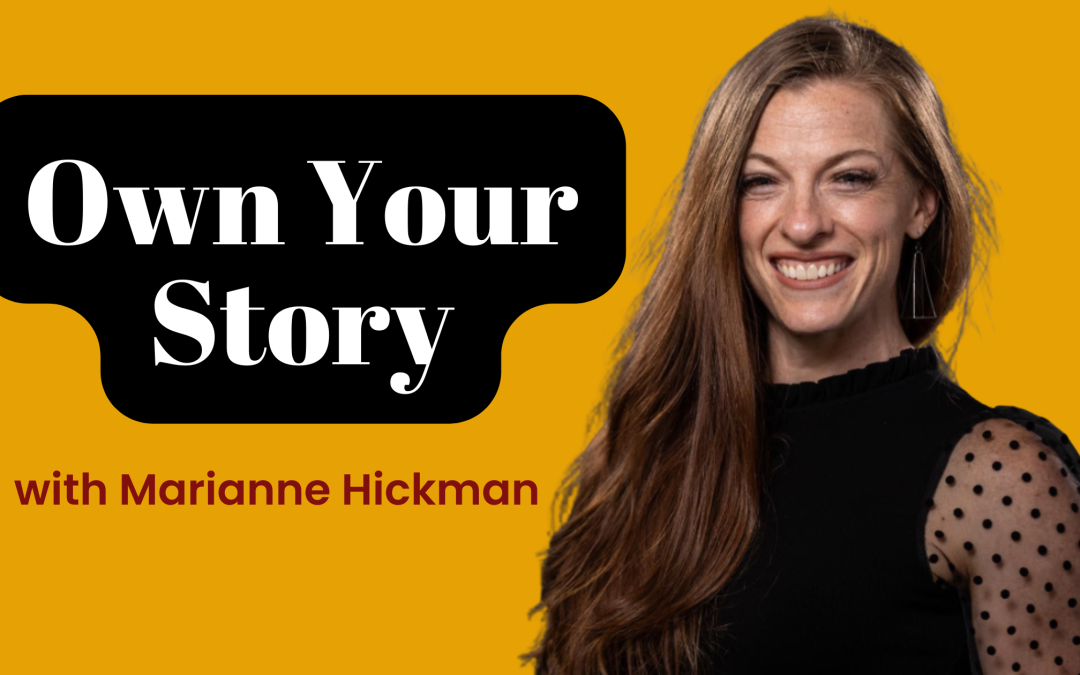
Have you ever had one of those conversations where, halfway through, you’re thinking, “Oh… this is different. This is deeper.” That was my entire interview with Marianne Hickman.
Marianne didn’t come to play it safe or give us a tidy inspirational moment. She came with the kind of honesty that makes you sit up a little straighter and rethink the stories you’ve been running from. She came with truth that’s been lived — not rehearsed. And she brought a kind of grounded courage that feels contagious.
And honestly? It was refreshing.
Because in a world full of perfectly polished “experts” telling you how to brand yourself, grow your influence, and follow the algorithm of the week… Marianne brings something most people don’t:
A story that wasn’t supposed to be a success story at all.
Who is Marianne?
Marianne Hickman is an international speaker, speaker trainer, and personal mentor who has graced over 2,000 stages worldwide. She’s not just a speaker—she’s a powerhouse in helping industry experts monetize their message and turn their speaking into a profitable business.
From being a single mom on food stamps to running a thriving business with her husband and raising six incredible children, Marianne knows firsthand the power of crafting a message that moves people to action.
Through her programs Marianne equips her clients with the tools to own the stage, deliver unforgettable presentations, and turn those moments into measurable results.
The Real Story Behind the “Influence”
Marianne didn’t start on a stage. She didn’t start with a brand. She didn’t start with a message.
She started on food stamps.
She started in survival mode.
She started in a life that made her question whether the dreams she felt inside were even allowed to exist.
When she shared that, she didn’t say it for shock value. She said it because it’s true — and that truth shaped everything she’s doing now. That part of her life is the reason her voice is so strong today. And she doesn’t hide it, because she knows someone needs to hear the beginning to understand the rest.
Listening to her talk, I found myself thinking, “Most people would’ve skipped over this part. She refuses to.”
And that’s exactly why her story hits so hard.
The Message Underneath the Message
If I had to boil down our entire conversation to the heartbeat running through it, it’s this:
Your story doesn’t become powerful when it’s polished. It becomes powerful when you stop trying to hide it.
That’s the part people miss.
We think the “best” version of our story is the cleaned-up one — the one after the healing, after the breakthrough, after the glow-up. The Instagrammable version.
But Marianne basically looked at that idea and said, “No ma’am. Tell the story you’re scared to tell. That’s the one people trust.”
And she’s right.
We’ve all felt the tension of holding back the messy parts. The parts that feel too personal or too embarrassing or too “who’s gonna listen to ME after that?”
But here’s what Marianne has lived and learned:
People don’t connect to your perfection. They connect to your humanity.
The Moment Everything Shifted for Her
There was one moment she shared that really stayed with me.
She told her story publicly for the first time — raw, unedited, shaky voice, all of it. And instead of people pulling back, they leaned in. They wanted more. They saw her differently… because suddenly she wasn’t “a speaker” or “a coach” or “a creator.”
She was a human they could trust.
That moment changed everything for her.
It wasn’t the polished branding. It wasn’t the content calendar. It wasn’t the “strategy.”
It was her willingness to be seen.
And let me tell you — that hits different when you’re a podcaster, a storyteller, or anyone who shows up for a living. It reminds you that the thing you’re avoiding might actually be the thing that unlocks your influence.
What She Really Wants Women to Understand
Throughout our conversation, I could feel this one thought pulsing underneath everything she said:
Stop shrinking your voice just because your story isn’t pretty.
She’s seen too many women say: “I don’t have a dramatic story.” “My beginning is too messy.” “My story is too ordinary.” “People will judge me.” “Who am I to speak on this?”
And Marianne answers all of those with her life.
The stages she’s been on? The clients she’s impacted? The influence she’s built?
None of that came after her life got easy. All of it flowed from the things she once thought disqualified her.
And that’s what she wants other women to understand — your early chapters don’t ruin your credibility. They’re the reason people will believe you.
Influence Isn’t a Strategy. It’s a Becoming.
Something I love about Marianne is that she refuses to teach influence as a checklist. She’s not giving you the “magic script” or the “one proven formula.” She challenges the whole idea that influence is something you create through effort.
With her, influence is who you become when you stop pretending.
It’s built through:
honesty
courage
self-awareness
empathy
resilience
and a willingness to actually be human
She said something in our conversation that I wish every creator, podcaster, and entrepreneur could hear:
“People don’t want the perfect version of you. They want the real one.”
That’s the part we forget when we’re worried about sounding professional or being impressive or staying on brand. Marianne brings us back to the truth: influence doesn’t live in the perfectly curated version of your story. It lives in the part that almost broke you.
Her Journey to the Stage
Let’s talk about that glow-up moment though — because “from food stamps to stages” isn’t a metaphor. It literally happened.
Doors opened for her once she stopped hiding the very thing she thought she needed to overcome before she could speak.
She got on stages — real stages, not the “one local event that counts as a stage if you squint.” She started coaching. She started leading. She started influencing.
And all of that momentum came from one decision:
She finally told the truth about where she started.
It’s wild how often we wait for our story to look better before we share it… not realizing that sharing it is how we help other people get better.
Why Her Story Matters to Podcasters & Creators
If you’re a podcaster, a storyteller, or someone building something with your voice, you need to hear this:
Your voice is not compelling because it’s perfect. It’s compelling because it carries your story.
That’s what makes your message different from every other coach, creator, strategist, mentor, or entrepreneur online. That’s what makes you recognizable. That’s what makes people trust you. That’s what builds real, lasting influence.
Marianne’s story is a mirror for anyone struggling to believe their voice matters.
It’s a reminder that the chapters you avoid are often the ones that carry your authority.
This Episode Is an Invitation
Not an invitation to trauma-dump. Not an invitation to use your past as marketing. Not an invitation to tell everything.
But an invitation to stop silencing the parts of your story that shaped you.
An invitation to see your beginning as part of your brilliance. An invitation to trust that your truth holds power. An invitation to let your voice come through without the polishing.
Marianne’s story isn’t about “look at me.” It’s about “look what happens when you stop hiding.”
Because let’s be honest, creating a podcast takes time, creativity, and energy. You pour your heart into your episodes, you’re consistent, you’re sharing value — and at some point, you start wondering, “Okay… how do I actually make money from this thing?”
If that sounds familiar, you’re not alone.
I’ve been getting more questions lately from beginner and mid-level podcasters asking, “Demetria, how do I monetize my podcast — for real?”
So today, I’m breaking it down. This isn’t a list of quick hacks or “get-rich-from-your-mic” nonsense. It’s about creating a real, sustainable system — one that lets your podcast feed your purpose and your profit.
Let’s get into it.
1. Create and Sell Your Own Offer
This is the most powerful way to monetize your podcast — hands down.
Your podcast can be your best marketing engine. Every episode is a chance to show your expertise, share your perspective, and help listeners understand what working with you actually feels like.
If you’re a coach, consultant, or creative, this is where your podcast can shine.
Think of your show as the top of your funnel — it’s where your audience gets to know you, trust you, and then naturally say, “You know what? I need what she offers.”
Here are a few examples of how this could look:
Courses or Workshops: Teach what you talk about. If your show is about branding, launch a mini-course on brand storytelling.
Coaching or Consulting: Use your episodes to demonstrate your expertise and invite listeners to work with you directly.
Done-for-You Services: Build episodes around the problems you solve — and then present your service as the solution.
Speaking Engagements: Use your show as your demo reel. Establish credibility so event organizers see your voice as a voice worth paying for.
👉 Pro Tip: Every episode should gently lead your listeners to take the next step — “If this resonated, I go deeper in my [course, program, or offer].” It doesn’t have to be salesy. It just needs to be intentional.
2. Create a Membership or Community
Turning your audience into a community is one of the most rewarding ways to monetize your podcast — especially if your listeners crave connection or ongoing support.
Here’s the truth: people aren’t just paying for “extra episodes.” They’re paying for access — to you, your insights, and the sense of belonging your podcast gives them.
Ways to build that in:
Create a monthly membership with Q&As, behind-the-scenes episodes, or group discussions.
Offer a private podcast feed with personal reflections, bonus interviews, or teaching moments.
Host a community circle on Circle, Mighty Networks, or Patreon.
Keep it soulful. Keep it authentic. Listeners love when they can move from passively listening to actively engaging — and you get to build something deeper than just downloads.
3. Host Workshops, Live Events, or Retreats
Bringing your listeners together in real-time? That’s magic.
There’s something incredibly powerful about connecting with your podcast community live — whether it’s virtually or in person.
Here are a few ways you can make that happen:
Host a live podcast taping with a Q&A session.
Offer a virtual mini-workshop around one of your podcast’s main topics — something actionable that helps your listeners take the next step.
Organize a retreat or summit built around your podcast’s theme — it could be creativity, purpose, wellness, or entrepreneurship.
Not only does this help you monetize through ticket sales, but it also gives you a goldmine of content. Record parts of your event and repurpose those clips into future episodes, promo reels, or online resources.
4. Values-Aligned Affiliate Partnerships
Let’s talk about affiliate partnerships — done right.
This isn’t about cramming ads into your episodes. It’s about recommending products or tools that you actually use and believe in.
Maybe it’s a journaling app that helps you reflect, a podcast mic that you swear by, or a course platform that’s changed how you run your business.
When it’s values-aligned, affiliate marketing becomes an extension of your storytelling — not a distraction from it.
Ways to integrate this naturally:
Mention products in relevant episodes (for example, when discussing productivity or creativity).
Add affiliate links to your show notes or website resources page.
Keep it transparent — tell your audience when something is an affiliate link and why you recommend it.
Authenticity is the best marketing strategy. Period.
5. Books, Journals, and Soulful Products
If your podcast carries a message — and I know it does — consider turning that message into something tangible.
Think:
A guided journal inspired by your episodes.
A soulful merch line — quotes, affirmations, or mantras that your audience already connects with.
A book or ebook expanding on your core themes.
These products build credibility, expand your brand, and create new income streams that don’t rely solely on episode downloads.
It’s a win-win.
6. Partnerships and Collaborations
Instead of chasing random sponsors, try co-creating with brands or businesses that share your values.
This could look like:
A co-branded mini-series where you and a partner create content together.
A toolkit episode highlighting resources or collaborators that help your audience.
Offering impact partnership tiers — where mission-aligned organizations support your show because your goals align.
The key is alignment. The wrong sponsor can feel off-brand, but the right one can amplify your message and introduce your show to new audiences.
7. Crowdfunding or Listener Support
When your show truly touches people, they want to support you.
Crowdfunding platforms like Patreon, Buy Me a Coffee, or Ko-fi make it easy for listeners to say, “Hey, I appreciate what you’re doing.”
You can offer:
Shoutouts or thank-you notes.
Early access to episodes.
Bonus behind-the-scenes content or private reflections.
Even a few dedicated supporters can make a meaningful impact. It’s not about asking — it’s about offering ways for people to give back to something that adds value to their lives.
8. Think of Your Podcast as a Brand Ecosystem
Here’s where I want you to zoom out.
Your podcast isn’t just a marketing tool — it’s the heart of your brand ecosystem.
When you start viewing it that way, everything else flows naturally.
You can:
Use your show to grow your email list.
Build trust that leads to coaching clients, speaking gigs, and collaborations.
Repurpose your episodes into newsletters, blogs, and social content.
The podcast doesn’t have to be the only thing making money — it’s the engine that fuels every other opportunity.
9. The Real Secret: Building a System
Now here’s the part most people miss — monetizing your podcast isn’t about wishful thinking.
It’s about building a system.
You need three things:
A clear niche — Who you’re talking to and why it matters.
An intentional offer or path — A way for listeners to go deeper with you.
Consistency — Both in content and in how you guide your audience toward that next step.
That’s it. You don’t need millions of downloads. You just need a plan.
In a future episode, I’ll share exactly how that system works — the flow from your podcast to your offer to your income. But for now, I want you to take this as your reminder: your podcast can be profitable, purposeful, and deeply fulfilling.
Final Thoughts
If you’ve been wondering how to monetize your podcast — start here.
Don’t overthink it. Pick one or two methods from this list that feel aligned with your purpose and values. Test them. Refine them. Grow from there.
And remember, monetization isn’t about chasing sponsors or download numbers — it’s about creating deeper value for your audience and letting that value translate into income.
If you’re ready to take your show to the next level, my agency can help you edit, polish, and streamline your podcast, so you can focus on what you do best — sharing your voice. And if you’re looking for clarity or guidance on growing your show, I’m here to coach you through that next step.
You can always reach me here at SoulPodcasting.com, and if you’d like to leave me a voice note, just click the pink tab on the right side of the screen.
And one more thing — if this resonated, please take a minute to leave a review on Apple Podcasts. It means so much and helps others discover Soul Podcasting.
Keep showing up, keep sharing your message, and as always — keep podcasting with soul.
Ready to lighten the load and podcast with more soul?
So you want to start a podcast — but you’re sitting there thinking, “Who’s even gonna listen?” No audience. No big social following. Maybe just a handful of people who like your posts every now and then.
Let me tell you something: that’s not a disadvantage. That’s your advantage.
Most people wait until they’re “known” before they start. You? You’re building from the ground up. That means you have freedom. You get to find your voice, your rhythm, and your message without the noise of everyone’s opinions.
And if you do this right — with heart, purpose, and strategy — you can build something that not only grows but lasts.
So let’s talk about how to actually start a podcast when you don’t have an audience… yet.
1. Forget the Algorithm — Focus on People
Everyone’s worried about downloads, analytics, and “going viral.” But when you’re starting, that stuff doesn’t matter.
What matters is connection.
Think about one person — the one who needs to hear what you have to say. Maybe it’s a new mom trying to rebuild her confidence. Maybe it’s a creative who’s burned out. Maybe it’s the version of you from two years ago.
Talk to that person. Directly.
When you speak with that level of clarity and heart, people feel it. They start sharing your podcast, talking about it, and showing up because you’re not just making content — you’re building trust.
That’s what grows a podcast. Not numbers — relationships.
2. Keep Your Setup Simple (No, You Don’t Need Fancy Gear)
Listen, I’ve been podcasting for years, and I still use my good ol’ Blue Yeti mic — the one I bought off Amazon. It’s not the most expensive, but it gets the job done beautifully.
Here’s what I tell beginners: start with what you have. If you have a mic — great. If you don’t, use your phone or your computer mic.
The real secret isn’t the gear. It’s your environment.
I use a foam box and a pop filter attached to my mic — also Amazon purchases. That’s it. Those two little things make your audio sound clean and professional without breaking the bank.
Start small, then upgrade later. But don’t let equipment stop you from recording your message.
Because nobody remembers what mic you used — they remember how you made them feel.
3. Create a Clear Concept
Before you even hit record, get clear on what your podcast is about and why it matters.
Here’s a quick framework to help you shape it:
Your Purpose: What’s the deeper reason behind your podcast?
Your Promise: What will listeners get from tuning in?
Your Person: Who are you really talking to?
Your Point of View: What makes your voice or approach unique?
You don’t need a perfect tagline right now, but you do need clarity. Because clarity creates consistency — and consistency is how you grow when nobody knows you yet.
4. Record Messy First Drafts
Your first few episodes? They won’t be perfect. They’re not supposed to be.
When you start a podcast, the goal is to start. Not to sound like NPR or have Hollywood-level production.
I tell new podcasters all the time — just record something. Then record again. The more you practice, the more confident and natural you become.
Don’t delete your early episodes out of embarrassment. Keep them as a reminder of how far you’ve come. Everyone starts somewhere — and your growth becomes your testimony.
5. Use What You Have to Find Listeners
Here’s the truth: you already have an audience — you just haven’t activated them yet.
You’ve got friends, coworkers, social followers, old classmates — people who already know you exist. Start there.
Here’s what to do:
Announce your podcast on your social platforms.
Share short clips or quotes from your episodes.
Ask for feedback and invite people to DM you their thoughts.
Add your podcast link to your email signature or bio.
Even if ten people listen, that’s ten people who chose to give you their time. Honor that. Nurture it.
Your audience will grow because of how you show up — consistently, authentically, and with real value.
6. Don’t Chase Perfect — Chase Real
One of the biggest mistakes I see new podcasters make is trying to sound “professional.”
You don’t need a radio voice. You need your voice.
People don’t connect with polish; they connect with personality. They want to feel like they’re sitting across from you, coffee in hand, having a real conversation.
So if you trip over a word? Keep going. If your dog barks in the background? Laugh it off. That authenticity is what makes your podcast memorable.
7. Build in Public
This is one of my favorite strategies — and hardly anyone talks about it.
When you’re starting from zero, build in public.
Share your process on social media:
“Just finished editing Episode 1!”
“Here’s the mic I use for recording.”
“Feeling nervous but excited to hit publish today.”
Let people see your journey. It invites them into your story. And over time, they become part of it.
Building in public turns curiosity into community.
8. Stay Consistent (Even When It’s Quiet)
This part’s hard — but it’s where most people quit.
You release an episode, and only a handful of people listen. You check your stats and feel deflated.
Let me tell you — every podcaster has been there.
But here’s what separates those who last from those who fade: consistency.
Keep showing up. Keep publishing. Keep learning.
That quiet season? It’s your foundation. It’s where you refine your voice, find your rhythm, and grow your roots.
Because one day, someone’s going to find your show — and binge every single episode you created when nobody was listening.
That’s the magic.
9. Engage the People Who Do Show Up
When someone listens, comments, or messages you about your podcast — respond.
Say thank you. Ask what they loved most. Invite them to share your episode with a friend.
The people who show up early are your core listeners. Treat them like gold.
You’re not just building a podcast — you’re building a community.
10. Give Yourself Permission to Evolve
You might start your podcast thinking it’s about one thing — and six months later, realize it’s about something deeper.
That’s okay. That’s growth.
Your podcast will evolve as you evolve. Let it.
The beauty of podcasting isn’t perfection; it’s progress. It’s using your voice to share your truth, your lessons, your journey — in real time.
So start now, learn as you go, and trust that your story will lead you where you’re meant to go next.
Final Thoughts: Your Voice Is Enough
When I started my first podcast, I had no audience. No roadmap. Just a mic, a message, and a whole lot of faith.
And now? I’ve seen firsthand what happens when you stop waiting for “ready” and start creating from the heart.
So if you’ve been wondering how to start a podcast when nobody knows you yet — this is your sign.
You don’t need permission. You don’t need perfection. You just need to press record.
Your story matters. Your message has power. And your voice — your real, unfiltered, human voice — can move people in ways you can’t even imagine yet.
So go on. Start your podcast. The world’s waiting to hear from you.
🔗 Want More Support?
I’ve been getting more and more questions from beginner podcasters lately, and I love it. If that’s you — stay connected.
You can listen to my full episode, “How to Start a Podcast When Nobody Knows You Yet,” on the Soul Podcasting show (Episode 83).
Follow me on Instagram@SoulPodcasting for more soulful podcasting tips, resources, and inspiration to help you grow your voice — and your vision — with purpose.
Ready to lighten the load and podcast with more soul?