No doubt, if you’re curious about this thriving industry—what it’s all about, and why everyone seems to have a mic in front of them these days—you’ve probably asked yourself the question: what is podcasting?
Maybe you already know the basics. Maybe you’ve binged a few of your favorite shows and thought I could do this! Or maybe you’re just covering your bases before launching your own soulful podcast.
Either way, you’re in the right place. Let’s dig deep into this creative medium and answer the question what is podcasting—and why you should absolutely consider starting one of your own.
So, What Is Podcasting Exactly?
At its core, podcasting is a method of distributing audio (and sometimes video) content over the internet. This allows people to subscribe to your show and listen (or watch) on demand—whether they’re commuting, working out, folding laundry, or grocery shopping.
A podcast is typically hosted on a podcast platform or website and can be streamed or downloaded to a device like a smartphone, tablet, or computer. Listeners tune in via apps like Apple Podcasts, Spotify, or even smart speakers.
In other words, what is podcasting? It’s a flexible, on-demand, content-rich experience that lets your voice—and message—travel across the globe.
Here is a video I recorded a while back that can help you figure out what equipment you need to create podcasts.
The Nuts and Bolts of Podcasting
Let’s get the technical part out of the way so we can talk about the juicy benefits (and why I believe this medium is made for soulful entrepreneurs and purpose-driven founders like you).
Podcasting = creating audio content → uploading it to a hosting platform → distributing it to podcast directories → reaching an audience.
And don’t worry—you don’t need a fancy studio to start. The barrier to entry is low, and with a little bit of heart, intention, and strategy, you can launch a professional-sounding podcast that builds trust and connection with your audience.
A Few Benefits of Podcasting
You might be wondering—beyond the basic answer to what is podcasting—why should I invest my time and energy into creating one?
Here’s why:
👉 It’s personal and portable Listeners can take your voice with them anywhere. Whether they’re walking their dog, driving to work, or meal prepping, your words become a companion in their day.
👉 It builds authentic relationships As a podcaster, you have the power to create an intimate space where listeners feel connected to you and your message. Many of my listeners tell me they feel like I’m their life coach in their earbuds—and that kind of trust is priceless.
👉 It elevates your brand Podcasting gives you a platform to showcase your expertise, tell your story, and build authority in your niche.
👉 It helps your audience on a deep level As a podcast host for 17 years now, I’ve received countless messages from listeners who were ready to give up on their business or homeschooling journey—until they heard an encouraging word on one of my episodes.
What is podcasting if not a powerful tool for impact?
What You Need for Listening to Podcasts
From the listener’s perspective, what is podcasting? It’s an accessible, easy-to-enjoy experience.
All you need is a device and an internet connection. You can listen through:
One of the best parts? Many podcasts are free, offering massive value without a paywall. Personally, making my podcasts free has helped me build trust and grow my businesses organically. (Though, private podcast feeds are a great option for premium content or coaching memberships!)
What You Need for Creating Good Podcasts
Now, if you’re ready to flip to the other side of the mic and become the creator, here’s where the magic happens.
After you’ve asked yourself what is podcasting and gotten clear on your vision, here’s what you’ll need to bring your show to life:
1. Choose a Topic or Theme for Your Podcast
Pick a subject you’re passionate about and knowledgeable in. The more connected you are to your content, the more authentic and magnetic your podcast will be.
2. Choose Quality Equipment
You don’t need a $10k studio, but quality sound matters. Start with:
Microphone: Blue Yeti, Shure SM7B, Rode NT1-A, or even a trusty Shure SM58 (which I used for 10+ years!)
Headphones: To monitor your audio and edit precisely.
3. Recording Software
Use a DAW (Digital Audio Workstation) you’re comfortable with:
Your hosting platform will generate an RSS feed to distribute your show to directories like Apple Podcasts and Spotify.
5. Marketing and Promotion
If a podcast drops but no one knows it exists…does it make an impact?
You’ll need to promote your show:
Social media
Guesting on other podcasts
Collaborations
Email marketing
6. Consistency and Dedication
Podcasting is a long game. Success comes from showing up, delivering value consistently, and refining your craft over time.
What is podcasting if not a journey of commitment, growth, and evolution?
What’s In It for Me?
Now that you understand what is podcasting, you’re probably asking: how will it serve me and my business?
Great question. Here’s what podcasting has given me personally:
Professional Growth
Podcasting challenges me to continue learning and showing up as a leader in my space.
Deeper Connections and Networking
Podcasting opens doors to conversations, collaborations, and relationships I might not have formed otherwise.
Improved Communication Skills
Over time, I’ve become more comfortable speaking, thinking on my feet, and expressing my message clearly.
Space to Grow Into My Topic
Podcasting allows you to develop your voice and thought leadership organically, episode by episode.
Human Connection with Your Audience
Your podcast becomes a vehicle for authenticity. Your listeners will hear your heart—not just your marketing messages.
Added Credibility
Podcasting elevates your authority both with your community and search engines.
When people Google you or your business, having a podcast attached to your name signals leadership, commitment, and expertise.
For me, these benefits have been more than worth the time and energy I pour into my podcasts. Seventeen years later, I’m still podcasting—because the impact continues to multiply.
Get Started with Your Own Podcast
Since 2020, podcasting has experienced a massive boom—and it’s not slowing down. The world is craving authentic, human-centered content—and there’s never been a better time to step behind the mic.
Now that we’ve thoroughly answered what is podcasting, you may feel inspired to launch your own show. If so, I’d love to help!
My team and I offer podcast coaching and launch services to help you create a soulful podcast that amplifies your voice and your mission. We can help you go from idea to launched show in just two weeks!
So, to sum it up one more time: what is podcasting?
It’s an intimate, flexible, powerful medium that lets you connect with an audience in an authentic, lasting way. It’s a space where your voice, your story, and your heart can make an impact far beyond your local circle.
And it’s an adventure—one I believe every thought leader, entrepreneur, and mission-driven creator should consider taking.
Are you ready to start yours?
If this post inspired you, I’d love to hear from you. Leave a comment below and share what your podcast idea is—or reach out if you’d like support in bringing it to life. 🎙️
Ready to get booked or need help prepping for your next interview? At Soul Podcasting Collective, we help creatives and CEOs elevate their voice, clarify their message, and prepare for podcast interviews with confidence. Want support launching your media kit or practicing your story flow? Let’s co-create something powerful. Contact us here.
In the world of thought leadership and content creation, your voice is your signature. And podcast interviews? They’re your stage.
Whether you’re stepping up as a guest or hosting a dynamic conversation, knowing how to prepare for a podcast interview is what separates a scattered, forgettable moment from a soul-stirring exchange that echoes across platforms.
This post isn’t just another checklist. It’s a call to intentionality. If you’ve been called to speak, it’s time to steward that moment with care—and that starts before the mic is ever turned on.
Let’s get into it.
1. Understand the Show’s Vision Before You Show Up
Before you say yes to a podcast opportunity, do your homework. Take 15–20 minutes to really listen in to the podcast:
What’s the tone of the host?
Who are they talking to?
What’s their vision?
Are they asking deep questions or keeping it light and tactical?
Understanding the show’s rhythm gives you context, and context gives you confidence.
If you’re serious about showing up fully, you can’t wing it. Preparing for a podcast interview means aligning your voice with the environment you’re stepping into—without compromising your authenticity.
📌 Pro tip: If the show has show notes, read them. If they have a website or brand guide, scan it. The goal is to get a feel for the space you’re entering.
2. Know Who You’re Speaking To
Every message lands stronger when it’s tailored. So before the interview:
Ask the host who their listeners are.
Get clear on their age, industry, or stage of business.
Think about what they’re really struggling with.
Once you know the listener, you can shape your answers in a way that serves. That’s leadership.
You’re not just showing up to talk about yourself—you’re showing up to add value, challenge perspectives, and create transformation.
That’s the real art behind how to prepare for a podcast interview like a pro.
3. Lock In Your Core Message
Here’s where the soul meets the strategy.
Your podcast appearance needs a clear throughline. One core message that drives your story forward. Without it, you risk rambling—and rambling costs you listeners, trust, and future bookings.
So, ask yourself:
What’s the ONE thing I want people to remember about me?
What result, mindset shift, or method do I want to highlight?
Build 2–3 talking points around this core. Then pepper in a signature story—a moment that brings your message to life.
Your voice is powerful, but your clarity is what gives it weight.
4. Prepare Your Call to Action (CTA)
You’d be surprised how many amazing interviews end with… silence. No direction. No follow-up.
Don’t let that be you.
Think about the one next step you want your listeners to take:
Visit your website?
Download a free guide?
Follow you on Instagram?
Join your newsletter?
Make your CTA short, soulful, and easy to say out loud. And remember: this isn’t a sales pitch. It’s an invitation to stay connected.
Say it with confidence and warmth—because you’re not just asking for clicks. You’re building community.
5. Practice Without Over-Scripting
This is the sweet spot between preparation and presence.
You want to practice your flow so you’re not caught off guard—but you don’t want to sound like you’re reading from a teleprompter.
Here’s how:
Record yourself answering a few common questions.
Practice telling your story in under 2 minutes.
Rehearse your CTA until it feels natural.
When you know your talking points inside and out, you leave space for spontaneity—and that’s where the best conversations happen.
You’re not here to perform. You’re here to connect.
6. Set Up Your Space with Excellence
You’ve done the internal work. Now let’s get the external setup right.
If you’re serious about learning how to prepare for a podcast interview, don’t neglect your tech:
✅ Use a quality microphone (USB or XLR preferred- Here’s a great beginner-friendly mic list from Buzzsprout if you’re not sure where to start.) ✅ Plug in headphones to avoid echo. ✅ Record in a quiet, echo-free room (closets are great if needed!). ✅ Test your lighting and internet (especially for video interviews).
You don’t need a studio. But you do need clarity, consistency, and a professional presence. Because how you show up visually and sonically is part of your brand. Be sure to pick up your Launch Confidently Checklist here.
7. Confirm the Details (and Be Early!)
Always confirm:
Date and time (with timezone!)
Platform (Zoom, Riverside, StreamYard, etc.)
If the host wants a short bio, photo, or social links
Arrive 5–10 minutes early to settle in, test your gear, and breathe.
Being early signals respect—for the host, for the audience, and for yourself.
8. Treat the Interview Like a Soulful Conversation
Forget the pressure to be “perfect.” You’re not delivering a TED Talk—you’re co-creating a dialogue.
Here’s what helps:
Breathe before you answer.
Listen fully to the host’s questions.
Don’t be afraid to say, “That’s a great question. Let me think about that.”
When you’re present, the audience feels it. When you’re real, the message lands. And when you’re rooted in your values, you magnetize the right people.
Learning how to prepare for a podcast interview is about preparing your mindset, not just your message.
9. Follow Up with Intention
Your interview isn’t over when the recording stops. If anything, this is when the relationship begins.
After the episode:
Send a thank-you note.
Ask when the episode will air.
Offer to promote it and tag the host.
Keep the connection going—collaborations often bloom from good vibes and good follow-through.
10. Repurpose the Interview
You just dropped gems. Don’t let them disappear into the podcast archive.
Here’s how to repurpose:
Turn quotes into Instagram posts or carousels
Use a 30-second audio or video snippet as a teaser. Tools like Headliner make it easy to create scroll-stopping audiograms.
Embed the episode on your website or speaker page
Add it to your media kit or pitch deck
This is what we mean at Soul Podcasting when we say your voice is an asset. You’re not just creating content—you’re building legacy.
Final Thoughts: This Is Bigger Than a Mic
If no one told you yet today—your story matters.
Your insights, your lessons, your divine downloads… they’re not just for you. They’re for the people on the other side of the mic who are waiting to hear what only you can say.
So if you’ve been invited to speak, don’t downplay it. Don’t show up halfway. And please don’t wing it.
Step into the moment like the visionary you are. Show up soulfully and prepared. Lead with value. Speak from your story. And leave your listeners stirred, not just informed.
Because when you prepare with purpose, you don’t just do a podcast interview.
You spark transformation.
Ready to get booked or need help prepping for your next interview? At Soul Podcasting Collective, we help creatives and CEOs elevate their voice, clarify their message, and prepare for podcast interviews with confidence. Want support launching your media kit or practicing your story flow? Let’s co-create something powerful. Contact us here.
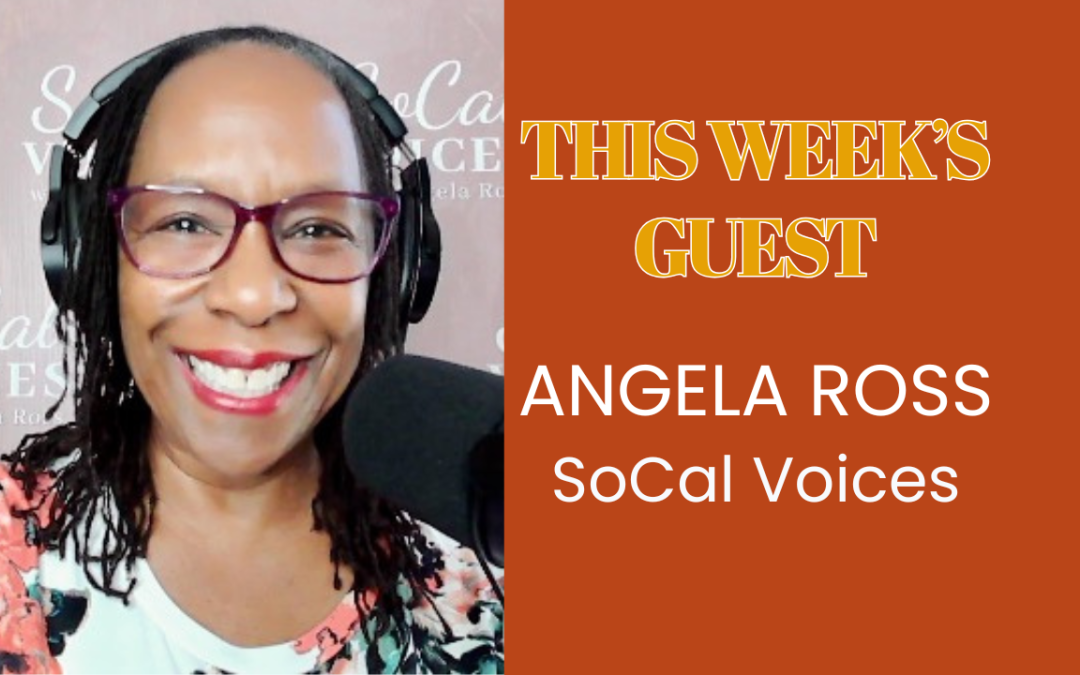
On the latest episode of the podcast, I had the joy of sitting down with Angela Ross — host of SoCal Voices, former broadcast journalist, and award-winning leader in media, marketing communications, and public affairs. Angela’s voice is calm, strong, and deeply insightful — and this conversation was a masterclass in soulfully stepping into purpose through podcasting.
Whether you’re a seasoned podcaster or considering launching your first show, Angela’s story is a powerful reminder of how podcasting can be a therapeutic outlet and a vehicle for change.
Podcasting in a Time of Crisis
Angela launched SoCal Voices in response to two major cultural moments: the COVID-19 pandemic and the murder of George Floyd. Both events were triggering for her as a communicator and citizen, and rather than internalize her frustration and disillusionment, she decided to create something positive.
“I did it really to work through my own feelings… So much negativity, so much disillusionment. I needed to focus on things that made me feel safe, good, and aligned with my values.” — Angela Ross
What began as a cathartic outlet became a platform for amplifying the powerful, often-overlooked stories of Southern Californians making a difference in their communities.
From Broadcast to Podcast
With a strong background in broadcasting, Angela didn’t have to battle the technical learning curve that many new podcasters face. Her biggest hurdle? Making sure the content remained aligned with her vision for positivity and impact.
“It wasn’t about the logistics. It was: How do I do this in a way that is meaningful and helps me stay aligned with the positive things I’m trying to accomplish?”
Choosing Guests with Intention
Angela is intentional about her guests, sourcing from a mix of personal and professional networks, PR reps who understand her brand, and podcast matchmaking platforms like PodMatch. Her goal is to highlight stories that uplift, inform, and inspire — stories often missed in mainstream media.
“There are good people out there doing good things in the community. They don’t always get attention — but I wanted to give them a platform.”
A Few Favorite Episodes
Angela shared two standout episodes that continue to move her:
Dr. Susan Partovi – “The Skid Row Doctor” A physician working on the frontlines with LA’s unhoused population, treating patients directly on the streets. “She just walks right up to them and says, ‘Hey, what do you need?’”
Confidence Building for Girls – “The 2020 Club” A teacher helping young girls reclaim their confidence and learn their worth at an early age. “Girls start to lose confidence by 4th or 5th grade — she’s changing that trajectory.”
On Authenticity and Black Women in Podcasting
As two Black women navigating the podcasting space, Angela and I talked about the freedom we feel to show up fully and authentically — especially in a medium that allows us to control the narrative.
“It’s been enriching and empowering for me. Between education, experience, and family, I’ve never really struggled with imposter syndrome. I just show up and do the work.”
Her words were a breath of fresh air — a reminder that when we lead with preparation and purpose, authenticity naturally follows.
Episode Highlights & Timestamps
[2:08] – Introduction to Angela Ross and SoCal Voices
[3:00] – Why Angela started her podcast during COVID and the George Floyd protests
[4:50] – Using podcasting as therapy and a safe space for positivity
[5:01] – Overcoming mindset hurdles and launching with confidence
[5:44] – How Angela selects her podcast guests
[6:51] – Two powerful guest stories that left a lasting impact
[9:30] – Finding authority and authenticity as a Black woman in podcasting
Angela’s journey reminds us that podcasting is more than content creation — it’s a form of healing, storytelling, and activism. If you’re looking for a way to process your thoughts, amplify underrepresented voices, or spark hope in your corner of the world, take a page from Angela’s playbook and just start.
Because somewhere out there, your voice might be exactly what someone needs to hear today.
Ready to lighten the load and podcast with more soul?
So, you’ve launched your podcast—cover art polished, trailer episode out in the world, and that first mic drop moment under your belt.
But now what?
Let me guess: you’re full of ideas, your voice is your brand’s secret weapon, and you’re all in—until life gets loud, the inbox stacks up, and suddenly it’s been two weeks since your last episode. No shame here, friend. I’ve been there.
Let’s talk about the backbone of a thriving podcasting presence: your podcast schedule.
This isn’t just about plugging dates into a Google Calendar or color-coding your Airtable (though I do love a good color code). It’s about creating a rhythm—a sustainable, soul-aligned system that allows your podcast to not only live but lead in your content ecosystem.
Whether you’re podcasting as a creative founder, a service-based CEO, or a multi-passionate brand-builder, this post will walk you through why your podcast schedule is more than logistics—it’s legacy.
The Real Reason Your Podcast Needs a Schedule
Let’s get one thing straight: consistency isn’t about perfection—it’s about trust.
A podcast schedule builds predictability for your audience, which is one of the most underrated trust-builders in your business. Your listeners start to anticipate your content. They know your voice, your vibe, and your value—and they show up when you do.
Here’s what a solid podcast schedule can do for you:
Anchor your content strategy so you always know what’s next.
Train your audience to expect and engage.
Keep you accountable to your visibility goals.
Help you repurpose intentionally (hello, evergreen reels and SEO-rich blog posts).
Prevent burnout by honoring your bandwidth and batching wisely.
Without a schedule, your podcast becomes a passion project at best—and a source of guilt at worst.
And we don’t do guilt over here. We do grace. We do flow. We do strategy with soul.
Step One: Choose Your Podcast Rhythm
There’s no one-size-fits-all podcast schedule. That’s the beauty of this medium—you can shape it around your life, your energy, and your brand goals.
Here are a few schedule styles I recommend to my clients inside the Soul Podcasting Collective:
1. Weekly Drops (Standard, but Strategic)
Perfect for business owners looking to build momentum and visibility. This is the sweet spot if you’re creating a content marketing funnel around your podcast. Weekly shows can be solo episodes, guest interviews, or a mix.
Pro Tip: Make it easier on yourself by choosing episode themes for each month or quarter so your planning time is cut in half.
2. Biweekly Releases (Balanced & Sustainable)
Ideal for creatives who wear multiple hats or have a small team. A biweekly podcast schedule gives you breathing room and time to repurpose your episodes into blogs, audiograms, newsletters, and more. This method has worked out really well for me on one of my podcasts.
Pro Tip: Batch record two episodes per month and pair each release with a content repurposing workflow.
3. Seasonal Podcasting (The Soulful Series Model)
This is for the visionary entrepreneur who loves depth and intention. You drop a 6–10 episode season, then take a creative sabbatical or shift your focus to other content. When done right, this approach creates urgency, anticipation, and deep engagement.
Pro Tip: Promote each season like a product launch. Line up guests, plan your marketing, and make it binge-worthy.
Step Two: Align Your Schedule with Your Capacity
This is where we get honest.
It’s tempting to aim for a weekly release right out of the gate. But if you’re DIYing your edits, writing your own show notes, managing social content, and running a full-on business—baby, that’s a fast track to burnout.
Take a pause and ask yourself:
How many hours can I actually dedicate to podcasting each month?
Am I outsourcing editing or handling everything in-house?
How often do I want to repurpose content from each episode?
What other visibility channels (YouTube, LinkedIn, Instagram) am I maintaining?
From there, reverse-engineer your podcast schedule. If all you can handle is one intentional, high-quality episode a month that gets fully repurposed into a blog, reel, carousel, and email—guess what? That’s strategy.
More episodes don’t equal more impact.
Consistency + clarity = podcasting power.
Step Three: Create Your Soulful Podcast Workflow
Now it’s time to build your system. Your podcast schedule isn’t just about choosing days on a calendar—it’s about creating a workflow that supports your creativity and protects your peace.
Here’s a simple podcast schedule workflow to get you started:
WEEK 1: Content Planning
Review your quarterly themes.
Finalize your episode titles or outlines.
Send questions to guests (if any).
WEEK 2: Recording + Editing
Block 2-3 hours to record solo or guest episodes.
Send audio to your editor (or edit in Descript, GarageBand, etc.).
Add intro/outro and publish-ready file to your drive.
WEEK 3: Show Notes + Repurposing
Write SEO-friendly show notes or outsource them.
Turn your episode into a blog post (AI tools like ChatGPT can help you outline).
Create 1-2 social posts or short video clips.
WEEK 4: Promotion + Engage
Schedule social content.
Send out an email newsletter.
Engage with your listeners on your primary platform.
The key here is batching. When you plan ahead and create in focused sprints, you free yourself from last-minute stress.
That’s what soulful podcasting feels like—organized, intentional, and full of creative flow.
Step Four: Choose Your Publishing Day (and Stick to It)
This may sound minor, but choosing a publishing day adds structure to your entire business. Whether it’s Motivation Monday or Thought Leader Thursday, make it a signature move.
For Soul Podcasting, I love Thursdays for publishing because they give the team time to promote throughout the week—and listeners are typically more engaged midweek. But you do you.
What matters most is that you commit to your day. When your audience knows to expect you, they start weaving your voice into their routines—and that’s where loyalty builds.
Step Five: Build in Breaks and Sabbaticals
Friend, you are not a machine. You are a magnetic, mission-driven creative with a life and a legacy. So let’s normalize planning podcasting breaks into your schedule.
Whether you pause every 10 episodes or take a month off every summer, your podcast schedule should honor your personal rhythms. During those breaks, you can:
Replay popular episodes (“Best Of” series)
Publish mini updates or bonus clips
Repurpose older content for new audiences
You don’t need to ghost your listeners—you just need a rhythm that sustains your energy and vision.
Final Thoughts: Your Podcast Schedule Is More Than a Calendar—It’s a Commitment to Your Voice
Here’s the truth: podcasting is one of the most powerful platforms you’ll ever have as a founder, CEO, or creator.
But power without structure gets messy.
Your podcast schedule isn’t restrictive—it’s liberating. It allows you to show up with clarity, show off your brilliance, and share your message without burnout.
And if you ever feel stuck, unsure of how to structure your podcast or ready to hand off the editing, repurposing, and content planning to someone who gets it—that’s where Soul Podcasting Collective comes in.
We help you podcast with purpose, passion, and yes—a plan.
Let’s Keep This Energy Going
You don’t have to do this alone. You just have to start with a schedule.Book a coaching session with us to gain clarity on your podcast.
If you’ve ever felt the creeping weight of burnout in your podcasting journey—or like the spark you started with is dimming—I see you. I’ve been there, and I know firsthand how easy it is to fall out of alignment with your creative flow when life gets busy or the metrics don’t match your effort. But I also know that with a few mindset shifts and systems in place, you can absolutely stay in love with your podcast for the long haul.
In this new season of the Soul Podcasting Podcast, I’m inviting you into deeper conversations—not just about the mechanics of podcasting, but the heart of it. Today’s episode is a continuation of a conversation we started in Episode 32, where we talked about staying creative and burnout-free in podcasting. I’m also following up on our last episode about showing up authentically on the mic and never dimming your light for anyone. Because the truth is, your podcasting voice matters, and the way you care for it—emotionally, mentally, and spiritually—will determine how sustainable this journey feels.
Let’s get into it.
Why This Podcast (and This Season) Looks Different
Before we dive into today’s topic, you might have noticed our fresh podcast cover art—yes, we’ve had a glow-up! That visual shift represents a deeper one happening behind the scenes. This podcast is now intentionally crafted for creatives, thought leaders, CEOs, and purpose-driven podcasters who are not just creating content for content’s sake—but building legacy through voice.
If that’s you? You’re in the right place.
I’m building this space to reflect the kind of support we offer at the Soul Podcasting Collective: soulful, strategic, and built to honor your voice, your purpose, and your growth. So you’ll hear more elevated conversations, mindset shifts, and tools that support your expansion—not just your to-do list.
Signs You’re Falling Out of Love With Your Podcast
Let’s talk real. Have you experienced any of these lately?
Dreading your recording sessions
Procrastinating publishing your next episode
Over-editing or second-guessing everything
Comparing your show to others
Questioning your podcast’s impact or purpose
These are all signs that your creative rhythm may be out of alignment—or that burnout is lurking.
And no, it doesn’t mean you’re not cut out for this. It means it’s time to pause and recalibrate.
How to Stay in Love With Your Podcast
1. Reconnect with Your Podcast Purpose
Before you ever press record again, revisit your why. Why did you start this podcast? What message felt too important to keep to yourself? What kind of transformation did you hope to inspire in your listeners?
Your podcast purpose is your anchor—it keeps you grounded when things get noisy. I recommend journaling or voice-noting your vision again and coming back to it often.
2. Make Space for Your Real Life
One of the biggest creativity killers? Over-scheduling and not accounting for your real human needs. Maybe you’re parenting, running a business, managing clients, or just navigating the emotional ups and downs of being a creator in a loud digital world.
You have permission to build a rhythm that supports your life—not drains it.
That might mean batching your episodes. Or switching from weekly to bi-weekly. Or taking a planned season break. At Soul Podcasting, we help our clients plan podcasting workflows that feel sustainable—not overwhelming.
3. Let Go of Perfectionism
Burnout loves to hide behind perfectionism. It’ll whisper that the audio isn’t polished enough, your delivery needs work, or that your content isn’t “deep” or “valuable” enough. Lies.
Podcasting isn’t about perfection. It’s about presence. It’s about showing up with heart, honesty, and clarity—flaws and all.
Remember: your listeners are human, too. They’re not coming for your perfect production; they’re coming for connection.
4. Automate and Delegate Where You Can
Here’s the game-changing part. You don’t have to do this all alone. From editing to scheduling to client onboarding—there are tools and services that can make your life so much easier.
Let me tell you about one that’s been a total lifesaver for me…
HoneyBook: My Secret to Staying Sane as a Creative CEO
If there’s one tool that’s streamlined the back end of my podcasting business, it’s HoneyBook. From automating workflows and proposals to scheduling meetings and managing client communication—it’s truly my digital assistant.
And the best part? They’ve introduced AI-powered note-taking, so you can keep track of everything without lifting a finger during calls. If you’re a podcaster working with guests, clients, or collaborators—this is the tool you need.
One of the biggest reasons podcasters quit is because they try to do everything. Strategy, editing, show notes, audiograms, publishing… It’s a lot. And you deserve help.
That’s why I created the Soul Podcasting Collective. It’s a boutique podcast agency for creators, thought leaders, and business owners who want done-for-you support that feels like a team, not a transaction.
Whether you need editing, launch strategy, repurposing, or long-term podcast management—we can help you protect your voice and build your show without the burnout.
If you’ve been struggling to show up lately, I want you to know: the world still needs your voice. There’s no timeline you need to follow. There’s no race you need to win.
Take the time to breathe. Reconnect with your “why.” And build rhythms that allow you to enjoy this again.
You’re allowed to evolve. Your podcast can evolve too.
Let’s Chat!
Have you ever hit a burnout point in your podcasting journey? What helped you get back on track? Comment below or DM me on Instagram @soulpodcasting—I’d love to hear your story.
If you’re launching a podcast or refreshing an old one, here’s one small but powerful piece you don’t want to ignore: your podcast description.
As someone who’s been podcasting since 2004—back when we were recording on handheld recorders and uploading audio manually—I’ve seen so many podcasters pour their energy into creating incredible episodes but leave their podcast description as an afterthought. And to be honest, I’ve been guilty of that too in my early podcasting days.
But over time, I learned that knowing how to write a podcast description with intention can make a major difference. It’s one of those simple assets that quietly works in the background, helping you attract the right audience, improve discoverability, and present yourself as a credible voice in your niche.
Whether you’re a CEO, solopreneur, or content creator building your brand authority, your podcast description is not just a summary. It’s a positioning tool. Let’s walk through how to write one that draws people in, builds trust, and supports your broader podcasting and content goals.
Why Your Podcast Description Matters More Than You Think
Your podcast description is your show’s first impression. It tells potential listeners exactly what your podcast is about and whether or not it’s a good fit for them. It also helps podcast platforms like Apple Podcasts and Spotify understand and categorize your show—which means better visibility.
When I launched the Christian Homeschool Moms Podcast over a decade ago, I wrote a simple, heartfelt description that spoke directly to faith-driven homeschooling moms. It wasn’t fancy, but it connected with exactly who I was trying to reach—and it worked.
Later, when I started Her Business Elevated, I knew I needed a shift. That show needed to speak to entrepreneurial women, solopreneurs, and founders ready to step into their CEO identity. That shift in the description alone helped me start attracting the right listeners who were aligned with the content.
You can do the same for your show by being intentional from the beginning.
The 5 Essential Elements of a Powerful Podcast Description
Here’s the five-part framework I use with my podcast coaching clients at Soul Podcasting Collective. Whether you’re starting from scratch or refining an existing description, this formula will guide you toward something strategic and clear.
1. Start With Who It’s For
The best podcast descriptions lead with clarity about the audience. You want your ideal listener to read it and immediately say, “This show is for me.”
Example: “This podcast is for creative entrepreneurs and purpose-driven women ready to grow their brand, expand their voice, and lead with soul.”
Resist the urge to write to everyone. Speak directly to the person you want to serve. That level of clarity is what draws the right audience in.
2. Speak to the Transformation
People don’t just want information. They want transformation. What is your podcast going to help them become, achieve, or understand more clearly?
Example: “Each episode is designed to help you confidently show up online, amplify your message, and turn your content into real influence.”
When I launched Soul Podcasting, I wasn’t just offering tips on mic technique or editing. I was offering a mindset shift around podcasting—a deeper, more intentional way to show up with your voice. And I wanted the description to reflect that.
3. Outline What You Cover
Think of this as your show’s topic list or your core content pillars. Let listeners know what they can expect to hear.
Example: “We cover podcast strategy, soulful branding, content repurposing, storytelling, and CEO mindset—all through the lens of soulful business building.”
This not only sets expectations for your listeners, but it also helps your show show up in relevant searches.
4. Introduce the Host
This is your moment to build trust. Don’t skip it. Even a brief line about who you are helps establish credibility.
Example: “Hosted by Demetria Zinga, a podcast coach and content strategist with over 20 years of experience helping creative founders amplify their voices and grow their brand with purpose.”
If you’re new to podcasting, don’t worry. You don’t have to list decades of experience—just let listeners know who you are and why you care about the topic. That authenticity builds connection.
5. End With a Call to Action
Tell people what to do next. It could be subscribing, listening to a specific episode, or simply tuning in weekly.
Example: “Subscribe now and join us each week for honest conversations, strategic insights, and stories that inspire you to build your business with heart.”
Your description should always close with direction. Make it clear and easy.
A Podcast Description Template You Can Use
Here’s a simple template you can customize to fit your brand and tone:
[Podcast Name] is the go-to show for [your audience] who want to [transformation or result].
Each week, we explore [list 3-5 core topics or themes] to help you [insert outcome or impact]. Whether you’re [scenario or role], or simply looking to [result], this podcast gives you the strategy, inspiration, and support to move forward.
Hosted by [your name], [short host bio and positioning statement], this show brings you authentic conversations, smart insights, and soul-centered strategy to help you grow with clarity and purpose.
Subscribe and start listening today.
Real Examples From My Own Shows
Let’s look at a couple of podcast descriptions I’ve written and why they’ve worked.
Soul Podcasting “The Soul Podcasting Podcast is your guide to podcasting with purpose and growing your brand with strategy and soul. Hosted by podcast coach and content strategist Demetria Zinga, each episode brings you smart podcasting tips, soulful business conversations, and inspiring interviews to help you amplify your voice, build authority, and create lasting impact—without burning out.”
Why it works:
Speaks directly to the transformation and target audience
Positions the host clearly
Highlights the blend of strategy and heart
Her Business Elevated “Her Business Elevated is the podcast for visionary women building impactful brands, thought leadership, and legacy through smart content strategy and CEO mindset work. Hosted by digital marketing strategist Demetria Zinga, this show helps you elevate your presence, refine your message, and lead with purpose.”
Why it works:
Speaks to legacy-driven women
Uses strong, confident language
Emphasizes transformation and leadership
What to Avoid in Your Podcast Description
Here are a few common pitfalls to steer clear of when writing or revising your podcast description:
1. Being too vague Phrases like “a podcast about life, love, and everything in between” don’t give enough direction. Be specific.
2. Overstuffing with keywords Yes, you want your show to be discoverable, but avoid cramming in keywords unnaturally. Write for humans first.
3. Making it too long Keep it concise and compelling. Aim for 125–250 words—just enough to inform and inspire without overwhelming.
4. Using buzzwords without substance Words like “authentic,” “aligned,” and “magnetic” are fine, but without context, they can lose meaning. Ground them in your actual message.
5. Forgetting to highlight the host You are the voice behind the show. Make sure your experience and personality are reflected.
Final Thoughts: Describe With Intention, Podcast With Purpose
Your podcast description is more than filler text—it’s your show’s invitation, your positioning tool, and a key part of your brand message. When it’s done right, it sets the tone for everything else: your episodes, your marketing, and even how you show up as a leader.
At Soul Podcasting Collective, I help creatives and entrepreneurs not just build shows—but build platforms of purpose. And that purpose starts the moment someone lands on your podcast page.
If you’re unsure whether your current description is working for you, or you want help crafting a stronger foundation for your podcast launch, let’s talk. Whether you need a coaching session, done-for-you strategy, or launch support, I’ve got tools to help you show up powerfully and soulfully.
Need help crafting a show description that aligns with your brand and attracts the right audience? That’s exactly what I help my clients do—through launch strategy, podcast coaching, and done-for-you services. Book a discovery call with me or explore my podcast launch packages at Soul Podcasting Collective.
Let’s make your podcast not just sound good—but look and read like the authority it truly is.
You have something important to say. Let your podcast description reflect the value you bring to the table.